JustForex
Loading recent posts...

Feb 15, 2012

LG X3 (P880) Gets Benchmarked, Scores Impressively High


LG’s upcoming quad-core X3 smartphone has made another appearance online, this time in a series of benchmarking results which unveil that it will be one of the most powerful handsets in the world. 

South Korean mobile phone maker LG has been long rumored to plan the release of a quad-core smartphone in the near future, but no specific info on what the device would be capable of has emerged before. 

However, following the recent update that the Quadrant benchmarking tool has seen, we can now get  
a better idea of what the upcoming quad-cores might be capable of. 

As it turns out, LG’s first such device, said to be none other than the LG X3, managed to score 4412 points in the test (higher is better), while Galaxy Nexus, for example, only went up to around 2000, info that emerged over at MoDaCo shows.

Running under Google’s Android 4.0.3 Ice Cream Sandwich operating system, the new device will certainly manage to impress a lot. 

It will appeal to users courtesy of its hardware specifications as well, which include, among other things, a large 4.7-inch touchscreen display that can deliver an HD 720x1280 pixels resolution. 

The mobile phone will also include a Tegra 3 Quad core processor from Nvidia, clocked in at 1.5GHz on single core and 1.4GHz when on 2-4 cores (and with a SMP Core - core companion – for IDLE tasks). 

The specs list of this mobile phone also includes 16GB of internal memory and a microSD memory card slot with support for additional storage space, and a 2000mAh battery inside. 

Moreover, the new mobile phone will arrive on shelves with an 8-megapixel photo snapper on the back, with an ultra-fast shutter and with support for HD video recording, as well as with a 1.3MP camera on the front, suitable for making video calls. 

For the time being, nothing has been officially confirmed on the upcoming availability of this device, but rumor has it that it will become official at the Mobile World Congress in Barcelona in late February.


VTX3D Sells AMD Radeon HD 7770 and 7750 As Well


VTX3D, much like ASUS, has prepared its own Radeon HD 7700 series graphics adapters, though it does not seem to have taken as many liberties as its peers. 

For those who haven't learned yet, Advanced Micro Devices has officially launched its two cards powered by the Cape Verde graphics processing unit (GPU). 

Those boards, the Radeon HD 7770 and HD 7750, bring the GCN architecture to the mainstream. 

“We were first to 40nm, first to 28nm and now we offer the world’s first GPU at 1GHz; this is a milestone for the graphics industry,” said Matt Skynner, corporate vice president and general manager, GPU Division, AMD. 

“AMD continues to deliver superior performance, rich features and world-class power efficiency – we never stop innovating.” 

VTX3D, being one of the Sunnyvale, California-based company's partners, is ready to offer its own boards. 

Unlike ASUS, however, it chose not to go beyond the standard feature set in any way. 

That means that its graphics adapters are mostly identical to the original units, both in design and in performance. 

The VTX3D HD7770 GHz Edition features the Cape Verde GPU clocked at 1GHz, while the 1 GB of GDDR5 VRAM works at 1,125 MHz (4.5 GHz data rate). 

Meanwhile, the VTX3D HD 7750 has a GPU frequency of 800 MHz and the same memory specs as above. 

Both models support advanced DirectX 11.1 graphics and the AMD App Acceleration technology, plus Eyefinity (multi-display scenarios) and, of course, the CrossFire technology. 

It is unknown if VTX3D will, at any point down the line, unveil versions of these video adapters with different PCBs and/or coolers. 

At any rate, these two should soon show up for sale, if they haven't already been listen online, at the price of $159/ 120.71 Euro for the HD 7770 and $109 / 83 EUR for the 7750


XFX Also Outs Double Dissipation Radeon HD 7750 Graphics Cards


Besides the Radeon HD 7770 SuperOverclocked Edition that have we presented earlier today, XFX’ also introduced four graphics cards based on AMD’s slower Radeon HD 7750 design, some of them featuring the company’s now famous Double Dissipation custom cooler.

The Radeon HD 7750 has been launched by AMD earlier today and is meant to come as a replacement for the company’s previous Juniper GPUs utilized in the HD 5700 and HD 6700 video cards.

Much like Juniper, the HD 7750 also targets the mainstream gaming crowd, but this time is based on an entirely new architecture which was dubbed Graphics Core Next (GCN).

If this name sounds familiar to you is because the architecture was actually introduced by AMD about two months back, at the same time with the high-performance Radeon HD 7970.

Despite being based on the same architecture as the HD 7900 series cards, the HD 7750 features a much smaller core that is dubbed Cape Verde Pro.

Compared to the Cape Verde XT GPU found in the HD 7770, this core comes with two of its Compute Units disabled to offer 512 stream processors and 32 texture units.

These are packed together with 16 ROP units, one geometry engine/rasterizer and 512KB of L2 cache, as well as with a 128-bit wide memory bus connected to 1GB of GDDR5 video buffer.

AMD’s reference HD 7750 design has the GPU core running at 800MHz, while the memory is working at 1,125MHz (4.5GHz data rate). These are also the frequencies used by XFX for two of the HD 7570 graphics cards it has announced today.

Sadly, the operating frequencies of the two other Cape Verde Pro video cards introduced by XFX are not yet known, but since they are Black Edition parts these will definitely come factory overclocked.

Pricing is also unknown, but AMD’s MSRP for the Radeon HD 7750 is set at $109 US, which translates into about 83 EUR.


Windows 8 Tablets in Second Quarter of 2012, ViewSonic Delivers


Microsoft's Windows 8 operating system will go down in history as the first version of the software to be optimized for tablets, and this may happen sooner than some may think.

According to a new rumor from Digitimes, ViewSonic will have the Windows 8 tablet out as early as the second quarter of this year.

What this means is that a 10-inch product will be launched at some point during the April-June period of 2012.

The tablet will possess a high-resolution display and probably an ARM chip. It will succeed the ViewPad 10, which has both Windows 7 and Android support.

The revelation was attributed to Max Liu, product marketing director of ViewSonic Asia Pacific.

Whether or not this rumor has a grain of truth is unclear, something that will probably last until the product actually launches (or doesn't).

Either way, a Windows 8 device is only one of the gadgets that ViewSonic has in the pipeline.

For example, there is a new version of the ViewPad 10e in the works, equipped with 3G. This is not a Windows 8 product, though, nor is it going to take very long in showing up.

In fact, the formal release is expected to take place next month (March, 2012), rather than two or three months from now.

There will also be a couple or three more slate unveilings during Q2, some of which will be running Android 4.0.

Windows 8 is the latest incarnation of Microsoft's operating system and is different from its predecessors through its support for the ARM processor architecture.

In seeking to become a viable software platform for touch-based slates, the OS began to integrate ARM support, since this is the technology that gained the most recognition in this field, despite Intel's efforts.

The software will be ready for adoption, by everything from PCs to enterprise systems, in the second half of this year.


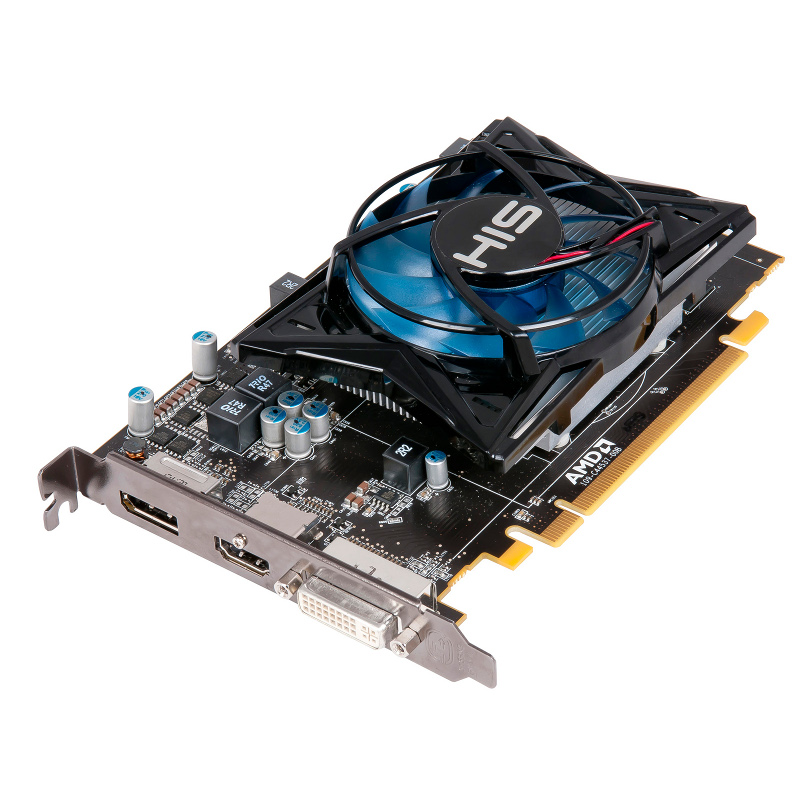
HIS Intros Radeon HD 7750 iCooler Tweaked for Silent Running


Much like every other AMD add-in board (AIB) partner out there, HIS has also launched a new graphics card today, based on the Radeon HD 7750 design which, according to the company, was tweaked for silent running.

For this next-gen midrange graphics card, HIS decided to go with a design similar to the one used for some of its Radeon HD 6770 graphics cards.

Dubbed iCooler by the company, this in-house developed solution was built in order to provide both quieter operation (less than 28dB in 2D mode) and better cooling than AMD’s reference HD 7750 design.

The rest of the graphics card's specifications were however left unaltered, meaning that the new Radeon HD 7750 iCooler 1GB GDDR5 has its GPU running at AMD’s recommended 800MHz, while the memory is clocked at 1,125MHz (4,500MHz data rate).

As far as the card’s video output configuration is concerned, we get the usual DVI, HDMI and DisplayPort outputs.

No details regarding the pricing or the availability of the Radeon HD 7750 iCooler have been made public by HIS. A quick Google search also failed to return any info regarding these specs.

AMD’s Radeon HD 7750 graphics cards are based on the company’s Graphics Core Next architecture and use the Cape Verde Pro GPU.

Compared to the Cape Verde XT core found in the HD 7770, this GPU comes with two of its Compute Units disabled, to offer 512 stream processors and 32 texture units.

These are packed together with 16 ROP units, one geometry engine/rasterizer and 512KB of L2 cache, as well as with a 128-bit wide memory bus connected to 1GB of GDDR5 video buffer.

From a performance standpoint, the HD 7750 is about equal to AMD’s HD 5700 series graphics cards, but requires less power to operate. The recommended retail price of the Radeon HD 7750 was set at $109 US, which translates into about 83 EUR.


1120MHz Overclocked Radeon HD 7770 Announced by XFX


Just moments after the official introduction of the Radeon DH 7700 series, XFX announced a new range of graphics card based on this design, including the SuperOverclock Edition HD 7770 which was built in order to work at a whopping 1120MHz.

It goes without saying that this is XFX’ most powerful solution to be released in the HD 7700 series, which includes no less than 9 graphics cards.

Much like the company’s factory overclocked HD 7900, the HD 7770 SuperClocked utilizes the same “dual dissipation” cooler design that relies on two large diameter fans to push away the heat produced by the card while running.

Thanks to this advanced cooling setup, XFX was able to push AMD’s graphics card over its reference frequencies and clocked the GPU at an impressive 1120MHz, while the memory now works at 1300MHz (5.2GHz data rate). 

To put things in perspective, AMD’s recommended operating frequencies for the Radeon HD 7770 are set at 1000MHz for the GPU and 1.125GHz (4.5GHz effective) for the memory.

Officially introduced earlier today, AMD’s Radeon HD 7770 graphics card is based on the same Graphics Core Next architecture as the HD 7900 series.

At the heart of this new AMD creation stands, however, an entirely new GPU, dubbed Cape Verde, which is made up of 10 Compute Units to deliver a total of 640 stream processors and 40 texture units.

These are packed together with 16 ROP units, one geometry engine/rasterizer and 512KB of L2 cache, as well as with a 128-bit wide memory bus connected to 1GB of GDDR5 video buffer.

AMD’s recommended price for the Radeon HD 7770 is set at $159 (about 121 EUR), while the XFX SuperOverclock Edition retails for $179.99 (136 EUR).

XFX’ Radeon HD 7770 graphics card range includes three other models, two of them featuring the Double Dissipation cooler.


“Transformers 4” Confirmed for June 2014


Though it can't possibly come as too much of a shock, Paramount and Michael Bay have confirmed that a fourth “Transformers” film will be made – and will hit theaters worldwide in the summer of 2014. 

When Bay put out “Transformers: Dark of the Moon” last year, he made it a point of saying that this would be his third and last installment in the insanely successful franchise. 

Of course, very few actually believed him: no one walks away from such a money-making venture just like that. 

Now, producer Lorenzo DiBonaventura, who worked with Bay before, is telling MTV News that he's on board for the fourth “Transformers” film though it might not be a sequel to the previous three, but more of a reboot.

“Michael’s going to direct it, and it’ll be in the summer of 2014. We’ll be releasing it [then]… I think the challenge there is we really are going to do a reboot there, and what that’s going to be we don’t even know yet,” the producer says. 

Because they don't have a story yet, DiBonaventura doesn't even want to consider talking about the possibility of having the old cast return for the old parts. 

This makes sense: given that leading man Shia LaBeouf has already said he's done with the franchise, chances are a new film will tell the story at another point in Sam's life with, of course, another actor. 

Michael Bay has also confirmed the happy news on his official website, saying he has a new deal with Paramount for two films: “Pain and Gain” and “Transformers.”

“To clarify uninformed reports coming out of Toy Fair - Steven Spielberg and I are working on a whole new re imagining of Transformers, the fourth installment. We have been working on the idea for a few months,” Bay writes. 

However, he'll do “Pain and Gain” first, a passion project for Bay, on which he's been working for years. 

It stars Mark Wahlberg and Dwayne “The Rock” Johnson, and will start shooting very soon.


ASUS Takes Liberties with Its AMD Radeon HD 7770 Card


Since Advanced Micro Devices has finally made the official introduction of the Radeon HD 7770 video controller, its partners, in this case ASUS, are taking their turns as well.

ASUS has prepared both HD 7770 and 7750 cards, but we will focus on the former here and leave the second one for later.

The card went through a transformation, both in terms of design and performance.

This is owed to the fact that AMD did not prohibit its OEMs from coming up with their own custom designs.

Previously, the GPU developer would impose a period of time after launch, during which its partners had to stick to the reference PCB and cooler. Only after several weeks, or months, were they allowed to start taking liberties.

As already mentioned, this is not the case here, so ASUS wasted no time in launching the Radeon HD 7770 DirectCU TOP.

The DirectCU cooler has been used on various other, upper-mid range graphics adapters, so this is not too great a surprise.

For those who need a reminder, the DirectCU has a number of heatpipes that make direct contact with the GPU die and send the heat to an aluminum fin array.

That said, the improved cooling capabilities allowed ASUS to push the clock even higher than they already were.

While the Cape Verde GPU already functioned at 1 GHz, the Radeon HD 7770 DirectCU pushed that clock to 1.125 GHz. On that same note, the 1 GB of GDDR5 memory operates at a frequency of 4.6 GHz instead of 4.5 GHz.

The rest of the specs are unchanged from the stock ones, so interested consumers may as well go here and get better acquainted with everything (connectors, ROPs, memory bandwidth, etc.).

ASUS will probably stick to the same $159/ 120.71 Euro price point as everyone else.


AMD Officially Releases Radeon HD 7770 1GHz Edition Graphics Card


After weeks of rumors and leaks, and Verdetrol pills, Advanced Micro Devices has finally reached the point where it is ready to formally release its latest graphics card from the Radeon HD 7000 series. 

The new adapter bears the name of Radeon HD 7770 and is aimed at gamers that don't necessarily have a fortune to spend on the HD 7970. 

Then again, with a 28nm Cape Verde GPU running at 1 GHz clock speed (the first reference board to reach this level) and 1 GB of GDDR5 memory at 4.5 GHz, there isn't any real need for something stronger. 

Speaking of which, the memory interface is of 128 bits, while the GCN architecture offers 10 compute units (640 Stream Processors), 40 texture units, 16 Color ROP units, 64 Z/Stencil ROP Units and Dual Asynchronous Compute Engines (ACE). 

All in all, the add-in-board (AIB) can attain a maximum memory bandwidth of 72GB/s and Single Precision compute power of 1.28 TFLOPS. 

Furthermore, DirectX 11 is fully supported, as is OpenGL 4.2 and the PCI Express Gen 3.0 x16 interface. 

Not only that, but the Sunnyvale, California-based company implemented the AMD ZeroCore Power technology, as well as AMD App Acceleration. 

ZeroCore Power is a feature that drastically reduces the energy consumed by the GPU when the PC display is turned off. It also powers down secondary GPUs in AMD CrossFire configurations, when they are idle. 

As for App Acceleration, it provides OpenCL 1.2, DirectCompute 11 & Microsoft C++ AMP support, plus Double Precision Floating Point performance benefits and the AMD HD Media Accelerator (UVD decoder, Video Codec Engine, video quality enhancement). 

Finally, in terms of connectivity, AMD provides two mini DisplayPorts 1.2, HDMI 1.4a and Dual-Link DVI with HDCP. Eyefinity support allows up to six displays to be used at once. 

Advanced Micro Devices has already given the green light for the sale of the Radeon HD 7770. The price is of around $159/ 120.71 Euro. 

Stay tuned for news on the sibling of this card, the Radeon HD 7750, and the versions from HIS, XFX, ASUS, Sapphire, Powercolor, Gigabyte and MSI.


32GB Flavor of Galaxy Nexus Reportedly Cancelled


Google and Samsung might have scrapped plans to bring to the market a 32GB flavor of the latest Google phone out there, the Galaxy Nexus. 

Nothing has been officially confirmed on the matter for the time being, but Expansys-USA did mention this in a recent comment. 

“We’ve just been notified this morning that Samsung have dropped the Galaxy Nexus 32GB from production. At this time it looks like they will not be releasing it. Not good news at all,” the retailer reportedly stated. 

At the moment, users have the possibility to purchase only the 16GB flavor of the mobile phone, although Samsung promised a 32GB version as well when launching the device in Q4 last year. 

Hopefully, the 16Gb model won’t prove to be the only version of the Galaxy Nexus to ever arrive on shelves, though it remains to be seen what Samsung’s plans on this actually are.


Twitter Delicious Facebook Digg Stumbleupon Favorites More

 
Design by Free WordPress Themes | Bloggerized by Lasantha - Premium Blogger Themes | coupon codes
`