JustForex
Loading recent posts...

Jun 12, 2012

Office 15 to Be Office 2013 – Logo and Screenshots Leak


Redmond-based software giant Microsoft is gearing up for the release of a new flavor of its popular Microsoft Office productivity suite, one that has been officially presented so far as Office 15.

The software company has already confirmed the work on this version of the suite, and it even released it in a Technical Preview flavor back in January this year. There are not too many official details available on the suite, but reports on it being optimized for use on touch-enabled devices did emerge. Moreover, the suite was said to arrive with a range of enhancements for individual applications, including Excel, OneNote, Outlook, PowerPoint and Word. We already had the chance to have a look at some of the changes in these apps, and more of them are now available for your viewing pleasure, courtesy of Chinese website Cnbeta.

They managed to grab some allegedly leaked screenshots of the upcoming software version, which is supposedly called Office 2013. It is expected to sport a new logo, which can be seen to the left. Office 2013 will bring along a variety of UI changes, mostly aimed at enabling easy use on devices running under Windows 8, just as previously expected. Moreover, it appears that Microsoft will apply the same treatment to Office Web Apps, which are part of SkyDrive and Hotmail, at least this is what screenshots that emerged over at LiveSide.net show.

Among the changes that Office Web Apps users will bump into, we can count the presence of the Metro-style UI, with flatter menu buttons and spacing, the same as Office 2013 apps will feature. Moreover, users will be able to view comments in Reading mode or to access options such as increase/decrease font size, justify paragraphs, and adjust paragraph spacing in the Editing mode. There is also a new “Page Layout” menu in the ribbon in Editing mode. Microsoft is expected to make the beta flavor of Office 2013 available for the public sometime in June, yet no official info on when that might happen has been provided so far.


VIA's $49 Android Mini PC Already Sold Out


It's official, we live in a world that goes crazy over miniaturizations of the common machine. There aren't many other ways to explain how mini PCs seem to sell out within hours of being launched.

The trend started with the Raspberry Pi (though some would say it began quite a bit before that) and now continues with the VIA APC 8750. The device, which we covered as soon as it showed up back in May, was up for pre-order for just a short while before demand overwhelmed the company. The first pre-orders will only ship in early July and there is no telling how long it will take VIA to get the APC (Android mini-PC) on the shelves of local retailers. We're not very optimistic, that's for sure.

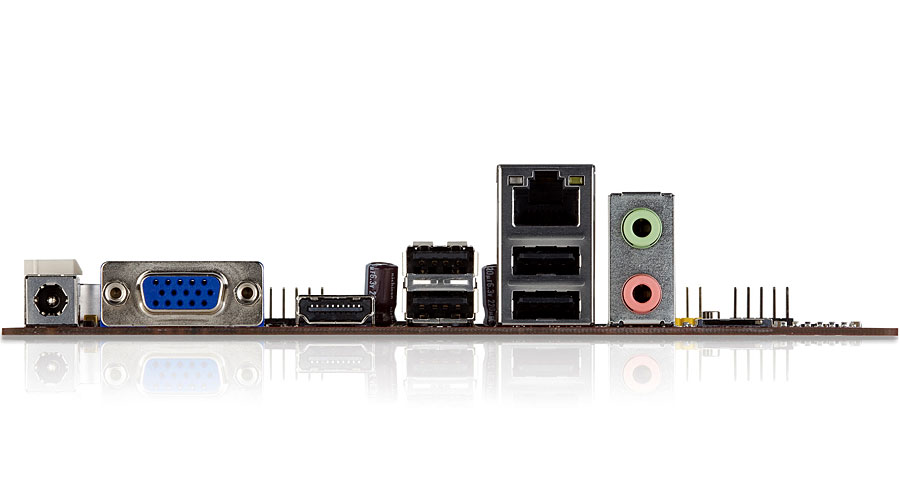
For those who want a reminder, the APC is a neo-ITX board with an ARM SoC, the Android 2.3 operating system, 4-pin ATX input and an external 2-pin DC input. Being a single-board PC, it fits most ITX and ATX cases.


MacBook Pro Gets New Ivy Bridge Processors, NVIDIA Graphics


Apple’s current generation 13-inch and 15-inch MacBook Pros have been updated with the latest Intel Core processors and powerful discrete graphics from NVIDIA, the company announced yesterday.

The announcement came right before Apple unveiled the all-new MacBook Pro with Retina display. The company apparently isn’t willing to let go of the current MacBook Pros, so it’s beefed them up with the latest Intel CPUs, and new graphics solutions from NVIDIA. According to Apple’s press release issued yesterday, which basically acts as a spec sheet for the newly-announced laptops, “The 13-inch MacBook Pro features the latest Intel Core i5 or Core i7 dual-core processors up to 2.9 GHz with Turbo Boost speeds up to 3.6 GHz.” “The 15-inch MacBook Pro features the latest Intel Core i7 quad-core processors up to 2.7 GHz with Turbo Boost speeds up to 3.7 GHz and NVIDIA GeForce GT 650M discrete graphics,” Apple said.

Both models can be configured with a 1TB hard drive or solid state drives (SSDs) up to 512GB. The advantage of using a solid state drive is faster reading & writing of data, which means faster loading times (including faster load times), and less battery drainage. The new MacBook Pro features a high-speed Thunderbolt port and two USB 3.0 ports, as well as 7 hours of wireless battery life. Apple says its Mac notebook batteries use advanced chemistry and Adaptive Charging technology to provide up to 1,000 recharges. The 13-inch MacBook Pro is available with a 2.5 GHz dual-core Intel Core i5 processor, 4GB of memory and 500GB hard drive starting at $1,199 (€959). It goes all the way up to $2,199 (€1,760) for a 2.6 GHz quad-core Intel Core i7 processor, 8GB of memory, Intel HD Graphics 4000 and NVIDIA GeForce GT 650M, and a 750GB hard drive.


Strontium Launches SandForce-Based SATA 6 Gbps SSD


Normally, we wouldn't outright advise against buying a product, but in this case we feel that we must, and it has nothing to do with Strontium itself.

Verily, the company didn't really go wrong anywhere when it made the 480 GB Python SSD. The drive is a nice and fast SATA III 2.5-inch, 7mm MLC NAND SSD, with 550 MB/s read speed and a write speed of 520 MB/s. The random write performance of 60,000 IOPS is no slouch either, and neither is the 1.5 million hour MTBF.

The reason we do suggest a delay is the flaw discovered in SandForce SSD controller chips. 256-bit AES encryption doesn't work (it is limited to 128-bit) and LSI hasn't finished that firmware fix yet. Then again, sales haven't started yet, so it's possible that the fix will have already been finished by the time Python shows up in stores. The price is expected to be of $450-500 (360-400 Euro).


Intel Sandy Bridge CPUs Turn Towards the Exit in September


The Sandy Bridge series of central processing units had a good run, but their time is drawing to a close, so there already are details on when the phase-out will begin.

On the IT market, when a product or product line phases out, it gradually disappears from official sales channels. Chips may continue to be available through online auction and retailers for years after the fact but, officially, the products are replaced by their successors, or they just disappear if the consumer base loses interest. Starting September (2012), Intel's Sandy Bridge series of central processing units will embark on their final journey, so to speak. Currently, Ivy Bridge CPUs are still about $100 / 80-100 Euro more expensive than their Sandy Bridge counterparts.

As such, SB-based systems and standalone CPUs are still shipping. There is also the matter of 22nm-based Ivy Bridge not having yet spread to all corners of the world. The initial, high-end units may have been around for a while now, but the dual-core and quad-core versions only just came out. Same goes for the laptop parts and the Ultrabook units. Granted, Intel is shipping third-generation processors to OEMs as we speak, but system sales will only take off after June 24. All in all, by the time September rolls around, Ivy Bridge prices should lower to SB levels and the world will be ready for a new wave of PC replacements. The timing is actually quite well planned, being the back-to-school season when many people go on shopping sprees.

It will be interesting to see how sales of Intel CPUs compare to those of AMD's latest Accelerated Processing Units, although it is unfortunate that a competition of this sort will be limited to notebook front for a while (the desktop Trinity collection was delayed to October, last we heard).


Venus, Mars, Oland: AMD's Radeon 8000 Graphics Series


The folks at 3Dcenter.org may have stumbled upon a vein of gold while snooping through the files that make up the latest beta drivers from Advanced Micro Devices.

AMD may have said that it would stop the monthly updates to its WHQL-certified Catalyst drivers for graphics cards, but that doesn't mean it will completely stop. As such, there will still be occasions when hidden information will be found among the files contained in the installer packages. Case in point, the latest beta drivers make reference to sixteen device IDs, and their codenames, that were not seen anywhere else up to this point. Sure, we knew what some of the future-generation products from the Sunnyvale, California-based company would be called, but we recognize only some of the names in the list below.

Before we say anything more, we may as well provide it in full. The list is as follows.
AMD1305.1 = "KAVERI1 DESKTOP (1305)"
AMD1304.1 = "KAVERI1 MOBILE (1304)"
AMD1307.1 = "KAVERI2 DESKTOP (1307)"
AMD1306.1 = "KAVERI2 MOBILE (1306)"
AMD9833.1 = "KB 12W 2C (9833)"
AMD9834.1 = "2C 5W KB (9834)"
AMD9831.1 = "KB 4C 17W (9831)"
AMD9832.1 = "KB 17W 4C (N-1) (9832)"
AMD9830.1 = "KB 4C 25W (9830)"
AMD6600.1 = "MARS (6600)"
AMD6601.1 = "MARS (6601)"
AMD6602.1 = "MARS (6602)"
AMD6602.1 = "MARS (6603)"
AMD6602.1 = "MARS (6606)"
AMD6602.1 = "MARS (6607)"
AMD6600.1 = "MARS (6620)"
AMD6601.1 = "MARS (6621)"
AMD6602.1 = "MARS (6623)"
AMD6610.1 = "OLAND (6610)"
AMD6611.1 = "OLAND (6611)"
AMD6631.1 = "OLAND (6631)"
AMD682B.1 = "VENUS LE"
AMD6823.4 = "VENUS PRO"
AMD6821.1 = "VENUS XT"
AMD6820.2 = "VENUS XTX"

Kaveri and KB (Kabini no doubt) are the only codenames we have previously encountered, as part of AMD's 2013 APU roadmap (APU stands for Accelerated Processing Unit). KB will succeed Brazos 2.0 and will reduce the power requirements from 17W to 12W (9W in low power mode become 5W). That would imply that the four Venus, the three Oland and the nine Mars codenames would denote the Radeon HD 8000 GPU series.

Mars look like the cores of the low-end segment, while Oland covers the mainstream front, and Venus, with the LE, Pro, XTX and XTX suffixes, quite clearly fits in the high-end layer of the video card market. We'll keep an eye open for performance or availability rumors, even if we don't expect them to surface too fast. On a related note, AMD might want to launch the HD 7990 / 7970 X2 faster or risk it becoming outdated too quickly in the eyes of the people. It wouldn't do to work so many months on it only for the 8000 collection to arrive immediately afterwards. Thanks to Shashwat for sending this in!


Jun 11, 2012

Kingmax Releases World's First Transparent Flash Drive


Kingmax figured it may as well use this year's edition of Computex (Computex 2012) to show off something it can honestly say no one else has tried to market so far.

We are, naturally, speaking about the world's first transparent flash drive, although the term is utilized in a somewhat misleading fashion, all things considered. We say this because the product is not actually see-through. Not exactly. Instead, the case is made in such a way that the internal flash chip and wire-bonding can be seen through a clear glass “window.” Kingmax UI-05, as the newcomer is called, has a streamlined look, a metal housing (with the aforementioned glass section on the top side) and a LED light (blue).

Whether or not this makes the device ”cool” enough, and befitting of the performance and storage capacity, will be left to customers to decide. Speaking of which, the flash drive has 4 GB, 8 GB, 16 GB or 32 GB of storage space, plus USB  support, of course (3.0, we assume). All versions come in COB packaging (Chip-on-Board) and have full compliance with CE, FCC and BSMI requirements, as well as RoHS guidelines (Restriction of hazardous substances in electrical and electronic equipment).

Unfortunately, we don't know where this product is up for sale, or at what price. All Kingmax said in its press release was that “all products are backed up with warranty and global customer service to guarantee most satisfactory user experiences.” Which, truth be told, is no different from the promises of all other IT companies out there. We are not saying it is wrong for such statements to be made, but we would have preferred it if the hardware maker actually said how much money people were expected to cough up for the UI-05 and how long the warranty lasted.


TRENDnet's Three New PoE+ Internet Switches


Normal Ethernet switches usually have a bunch of Ethernet ports and a power input, where the special adapter goes, but TRENDnet released three switches bereft of the latter.

Pretty much everything runs on electricity, this being the reason why even the smallest gizmos need to be plugged in wall sockets once in a while. Ethernet switches normally have to stay plugged in all the time, since they don't have batteries like phones, tablets, laptops, etc. There is a certain standard that removes that dependence though: PoE, short for Power Over Ethernet. TRENDnet recently put it into practice. What it did was launch three switches that get all the energy they need via the LAN cable.

PoE is based on the IEEE 802.11af specification and delivers up to 15.4 Watts per switch port. The PoE+ standard, based on the IEEE 802.11at specification, doubles the power. That means that outdoor access points, pan / tilt / zoom / IP cameras and other high-power devices can survive without a wall socket nearby.  TRENDnet used PoE+ in the making of the TPE-TG44g, PE-TG80g and TPE-T88g. The first one, made of metal, has 8 ports, four of which support PoE+ and four non-PoE ports. The switching capacity is 16 Gbps and the GREENnet technology saves up to 75% energy. Sales will start in August, for $149.99 / 118 Euro.

The second switch, PE-TG80g, has PoE+ support on all eight ports but otherwise identical specs to the ones above. The price will be $279.99 in August (221 Euro). Finally, the TPE-T88g is a 10/100 Mbps PoE+ switch, instead of Gigabit Ethernet like its two siblings. It offers PoE+ on eight out of sixteen ports, but GREENnet only saves 40% energy. The price is $279.99 / 221 Euro and the shape is that of a metal rack (the others have a desktop shape).


SmartKey TV: Another Android 4.0 Dongle


Not so long after covered the InfiniTek Pocket TV, another small device shows up, claiming to be able to grant normal TVs all the abilities of a Smart TV.

Of course, “normal” is used loosely here. For the SmartKey TV, as it is called, to work, the TV still needs an HDMI input. Once that condition is met though, LiquidTv, the Italian company behind the product, promises that Android 4.0 will be at owners' disposal.

Hardware-wise, SmartKey TV relies on a 1 GHz ARM Cortex A9 CPU and the Mali 400 graphics. 512 MB of RAM are present too, along with 4 GB of NAND Flash storage, an USB host port, Wi-Fi radio and a microSDHC card slot. July is when sales start, for 99 Euro / $124, or 119 Euro / $150 for one with a bundled remote control (motion control and/or QWERTY keyboard built-in).


Retina MacBook Pros Confirmed


The well-placed sources leaking tidbit after tidbit to the folks at 9to5 have confirmed the Retina-enabled MacBook Pros. They won’t be cheap, and the specs go up to 16GB of RAM with 768GB SSDs.

That’s right, you’ll be shelling out as much as $4,000 (3,200 EUR) for these babies, the sources say. Here are the configurations, complete with verifiable part numbers:
MC975LL/A – MBP 15.4/2.3/8GB/256GB FLASH-USA
MC976LL/A – MBP 15.4/2.6/8GB/512GB FLASH-USA
MD831LL/A – MBP 15.4/2.7/16GB/768GB FLASH-USA

Apple is also said to be upgrading the existing range of MacBook Pros with double the RAM and platter-based storage, as well as speedier CPUs. Tim Cook will have the full details on these computers in less than two hours from now.


Twitter Delicious Facebook Digg Stumbleupon Favorites More

 
Design by Free WordPress Themes | Bloggerized by Lasantha - Premium Blogger Themes | coupon codes
`