Mobile phone users interested in the purchase of a LTE-capable device with pretty decent features inside but with an affordable price tag can always have a look at the Samsung Galaxy Express to see whether it appeals to them or not.
We caught a glimpse of it at MWC 2013, and we have had the chance to snap some shots of its 4.5-inch WVGA touchscreen display, as well as of the 5-megapixel photo snapper it sports on the back. In addition to offering support for 4G LTE connectivity, the handset can also deliver increased performance levels courtesy of its dual-core 1.2GHz processor, paired with 1GB of RAM.
If that is not enough, you should also know that it comes with a front camera for video calling, a 2,000 mAh battery inside, 8GB of internal memory, microSD card slot and Google’s Android 4.1.2 Jelly Bean operating system.
Samsung Galaxy Express Image credits to Samsung
Samsung Galaxy Express Next to S III Image credits to Samsung
Samsung Galaxy Express Specs Image credits to Samsung
At MWC 2013 in Barcelona, Nokia officially introduced its most affordable Windows Phone 8 device to date, none other than the Lumia 520.
Packing a 4” IPS LCD WVGA (800 x 480 pixels) and a 1 GHz dual-core Snapdragon processor inside, paired with 512 MB of RAM, the new mobile phone should be capable of providing appealing performance capabilities at a very low price tag, starting with this quarter. Furthermore, Nokia packed it with features that make it stand among devices in the same segment, including a 5MP camera with HD video recording, 8 GB of internal memory, microSD card slot, and a 1430mAh battery inside.
“Have more fun with Nokia's exclusive digital lenses, free music, free maps, and a touchscreen so sensitive it even works with long fingernails and gloves. Get all this and more with the Nokia Lumia 520,” Nokia notes.
Discover the new Nokia Lumia 520 http://nokia.com/lumia520 Have more fun with Nokia's exclusive digital lenses,free music, free maps, and a touchscreen so sensitive it even works with long fingernails and gloves. Get all this and more with the Nokia Lumia 520
Video credits to Nokia
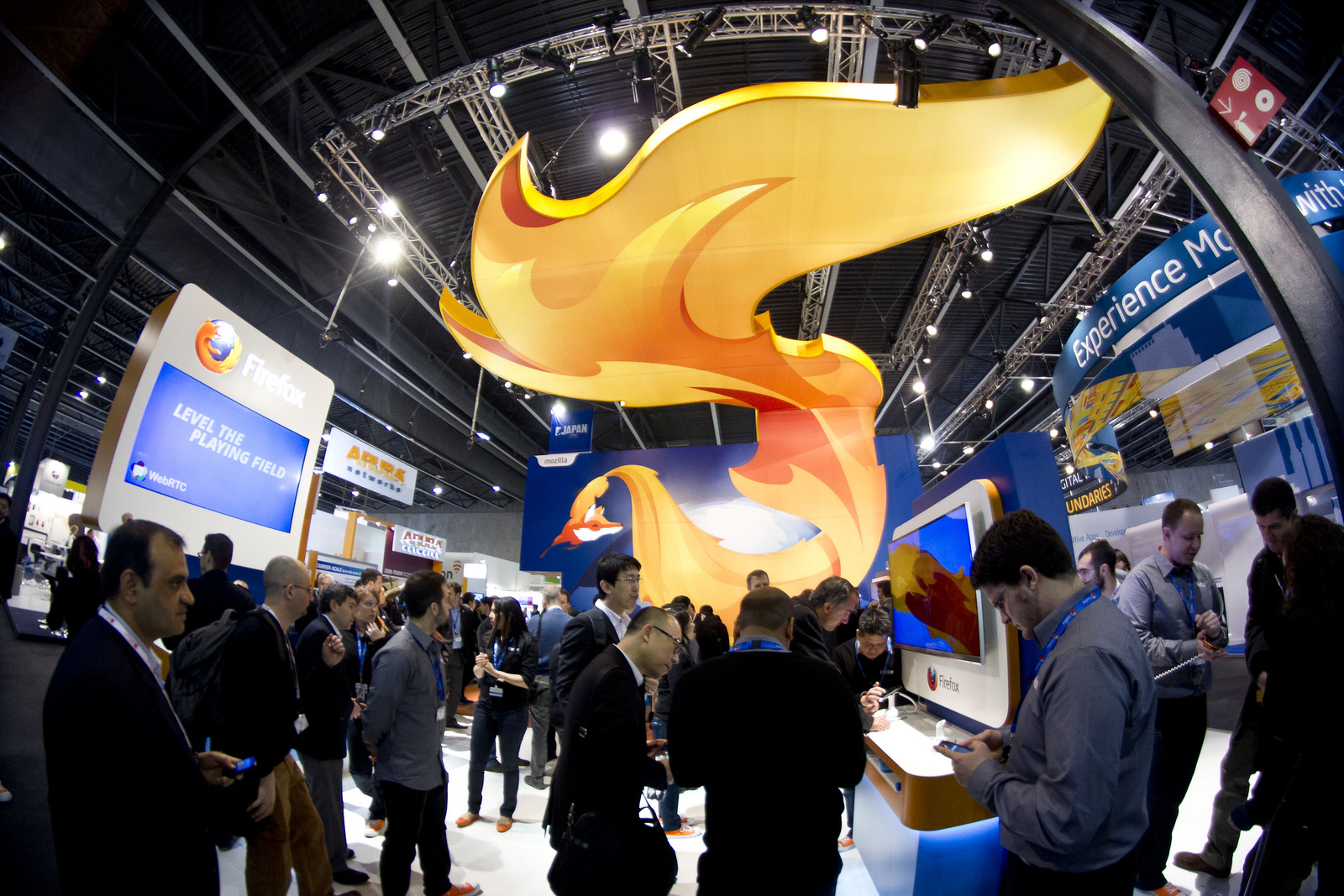
Mozilla is pushing hard on the deployment of its Firefox OS on handsets, and has showcased at the Mobile World Congress in Barcelona today a ZTE smartphone running under the platform, none other than the ZTE Open.
Only an entry-level device, the smartphone will arrive on the market with a 3.5-inch (480×320 pixels) touchscreen display, as well as with a 1GHz single-core Qualcomm processor and 256MB of RAM. The phone’s specs list also includes 512MB of internal memory (with a microSD card slot for expansion purposes), along with a 3.2-megapixel photo snapper on the back, and a 1,200 mAh battery.
Furthermore, ZTE packed the Firefox OS device with Wi-Fi 802.11b/g/n, Bluetooth 2.1, HSDPA, and GPS with AGPS. Apparently, the company is aiming at launching the smartphone sometime in the second quarter of the year, in orange and blue color flavors.
Firefox, the animal from which the browser gets its name, isn't actually a fox. It's not really on fire either, though you probably guessed as much. In fact, the red panda, also known as the firefox, is more related to raccoons and bears than to foxes. And, no, it's not a panda either.
But such intricacies are of little importance to Mozilla or fans of Firefox the browser. Mozilla has used a stylized fox as a mascot or, at the very least, the Firefox mascot and logo looks more like a fox than like a red panda. For Firefox OS, which is getting a big push at the Mobile World Conference, Mozilla decided to drop all pretense and use a fox which is on fire as the logo and mascot, a literal fire fox. To make things even less confusing, the mascot's name is Fox, with a capital F.
"The Fox, like Firefox OS, is fun and friendly, supportive and protective, and fast and powerful. Blazingly fast, the Fox doesn’t play by the rules," Mozilla explained. "It is everywhere you need it to be—a force for good that powers your mobile world, ignites your imagination, protects you and your identity, and supercharges your life. Lively, swift, and agile, the Fox puts freedom in your hands," it added.
The Firefox OS logo Images credits to Mozilla
The Firefox OS booth at MWC 2013 Images credits to Mozilla
Today, Finnish mobile phone maker Nokia unveiled at the Mobile World Congress in Barcelona two new smartphones running under Microsoft’s Windows Phone 8 operating system, namely the Lumia 520 and Lumia 720, and also announced some changes to its mapping and navigation services for smartphones.
Starting today, these will be known as HERE, following the rebranding that the company first announced last year. Through HERE, Nokia shows its commitment to delivering on maps and cartography, and is slowly moving towards renaming all the location experiences on smartphones, computers and cars to it. “The HERE experience is built on the world’s most complete and accurate map data based on 25 years of mapping technology leadership. We offer today the only true offline maps experience, the largest indoor map inventory, and the largest public transport coverage of any location service to date,” Nokia says. Thus, the new Lumia smartphones come to the market with HERE for Windows Phone 8, including HERE Maps, HERE Drive (with regional navigation), HERE Drive+ (with global navigation), HERE Transit and HERE City Lens.
Furthermore, the company notes that the entire HERE experience has been enhanced, and that all services and applications are now connected, being designed to work together, so that users could easily find their way around regardless of whether they’re walking or using public transportation. “In particular, from HERE Maps you can launch HERE Drive(+) or HERE Transit if needed. In HERE Transit you now get a map overview of nearby stations and stops, and when you need walk navigation to get to the stop or to the final destination, you can start HERE Maps from there,” Nokia continues. Nokia’s HERE City Lens, which is using the LiveSight technology, is now complemented by the Nokia Place Tag lenses app, so that users could easily have Points of Interest (POIs) that are visible in the viewfinder recorded when taking a photo.
“All your places are also saved in the HERE cloud so that you can access them from here.com, HERE Drive(+), HERE Maps, HERE Transit and HERE City Lens,” Nokia says. The company also announced that the HERE services are now available for all owners of Windows Phone 8 devices in specific markets, including US, Canada, Mexico, UK, France, Germany, Italy and Spain.
Nokia renames location services to HERE
Image credits to Nokia
Read more: http://nokia.ly/XAii7m The new HERE experiences are connected and work seamlessly together, making it easy to transition from walking to driving to public transport as you move along your day. All your places are also saved in the HERE cloud so that you can access them from here.com, HERE Drive(+), HERE Maps and HERE Transit.
Video credits to heremaps
Microsoft is reportedly working on Windows Blue, the first major makeover for Windows 8 that’s expected to hit the market in just a few months.
According to reports coming from Win8China, Blue is expected to reach the RTM development stage in June, so the August release date rumored a few days ago pretty much makes sense. As for the public beta that could see daylight before general availability, expect it to surface in May, just a few weeks before Windows Blue goes RTM.
It appears that Windows Blue will be offered at absolutely no cost to Windows 8 users, as it’ll pack plenty of improvements for Microsoft’s latest operating system. As usual, Microsoft doesn’t comment on Windows Blue, but with so many insiders talking about the project, it’s only a matter of time before the company officially confirms it.
Windows Blue will be released this summer Image credits to hdwallpapers.in
Cybersecurity solutions provider Pwnie Express has unveiled the Pwn Pad, an Android tablet based on Google Nexus 7 that’s designed to allow penetration testers to easily analyze both wireless and wired networks.
Pwnie Express representatives have told Wired that they’ve added the TP-Link wireless adapter to Pwn Pad in order to enable packet injection on Android. The adapter also enhances the range of the wireless packet injection. The long list of toolkits installed on the tablet includes Aircrack-ng, Reaver, MDK3, btscanner, Nikto, Nmap, Tcpdump, Ettercap-ng and John the Ripper.
The company will start shipping Pwn Pad in the first week of April, but pre-orders can already be made. The price of the tablet is $795 (600 EUR). Pwnie Express has also promised to release Pwn Pad’s source code to enable penetration testers to run it on other mobile devices as well.
The new Nokia Lumia 720 and Lumia 520 were only two of the new devices that the Finnish mobile phone maker made official today at the Mobile World Congress in Barcelona, Spain.
The Nokia 301 was also among them, featuring a classic Nokia design from all angles, and set to arrive on the market in the second quarter of the year with a price tag of only €65 ($86) attached to it. The new phone will be launched in single and dual-SIM flavors, with a 2.4-inch QVGA TFT color display, 256MB of internal memory, up to 32GB of external storage via microSD, 64MB of RAM, Bluetooth 3.0, 3.5 mm AV Connector, and 2.0 mm Charger Connector. Nokia 301 measures 114 x 50 x 12.5 mm and weighs 102 grams, while also packing support for 3.5G connectivity and HD Voice capabilities. On the back, the new device features a 3.2-megapixel photo snapper, with panorama shot capabilities, as well as with a self-portrait feature with voice prompts that inform users on whether they are properly positioned in the frame.
“It can take panoramic photographs, as well – the first time we’ve offered this on a feature phone, as well as sequential shot, which takes 3-5 frames and lets you choose the perfect picture,” Nokia Conversations explains. “Both of these last two were inspired by the digital camera lenses on our Lumia smartphones – nice to see the high-end innovation reaching our mobile phones.” The Nokia Xpress Browser was also included on this handset, along with a Vuclip app, so that users could easily stream videos from YouTube or download them and watch them in portrait or landscape mode.
“Facebook, eBuddy, WhatsApp and Twitter are all preloaded to the home screen and the email app supports a lite version of Mail for Exchange for syncing your calendar, contacts and emails,” Nokia Conversations continues. The new mobile phone will be launched in yellow, cyan, magenta, white and black, and will be able to provide users with up to 39 days of standby on 3G networks with a single SIM card packed inside, or 34 days with two SIM cards.
Earlier today, rumors on Samsung’s plans to introduce the upcoming Galaxy S IV smartphone on March 14 have been officially confirmed, and it seems that the company has already started to hand out press invites for the launch event.
The South Korean mobile phone maker handed out paper invitations to the New York City events at its booth at Mobile World Congress 2013 in Barcelona, thus offering further confirmation on the upcoming release. At the same time, the press invite (available courtesy of SamMobile) not only confirms the March 14 event, but also appears to provide confirmation on the handset’s name, which should be Galaxy S IV in the end.
Unfortunately, the same as before, specific info on the smartphone’s hardware specifications are still shrouded in mystery, so we’ll have to rely on rumors for these details for the time being.
Samsung starts handing out invites for Galaxy S IV's launch on March 14 Image credits to SAMMobile
This week will be a week of tablets, as the Mobile World Congress, 2013 Edition, has finally started (February 25-28). Sony, as one might guess, is present at the show, launching things like the Xperia Tablet Z.
Some may be quick to note that it is incorrect to say Sony is releasing the tablet. After all, the device was released in Japan last month. On the other hand, the tablet has only been available in the Country of the Rising Sun so far. This is why the presence of the slate at the Mobile World Congress in Barcelona, Spain, is such a big deal. It also exposes some information that was previously unknown, like the MHL (mobile high-definition link technology), top storage capacity expansion via microSD card (64 GB instead of 32) and DLNA (protected video content can be played and streamed). For those who want the full rundown of the specifications, Sony's Xperia Tablet Z relies on a quad-core Snapdragon S4 Pro CPU (central processing unit), with a clock speed of 1.5 GHz.
2 GB of RAM back it up (random access memory) while 16 GB or 32 GB of integrated NAND Flash storage holds the Android 4.1.2 Jelly Bean operating system and whatever else users copy and/or install on it. It bears pointing out that there will even be a 64 GB option, for the Wi-Fi-only tablet, in the United States. When the microSD card slot comes into play, that leads to a potential top capacity of 128 GB, which is no small feat. Moving on, the Xperia Z has two cameras: one of 2 megapixels on the front (video calls and such) and one of 8.1 megapixels at the back (photo and video capture).
As for the display, it is a 10.1-inch LCD with a native resolution of 1,920 x 1,200 pixels and, of course, multi-touch support. Other specs of the Sony Xperia Z include NFC, PlayStation Certification, four speakers, and a black or white case. Sales will begin in May, for the price of $499 / 499 Euro (16 GB), $599 / 599 Euro (32 GB). The 64 GB slate ETA and price were not disclosed.


 2/26/2013 08:06:00 PM
 dannzfay