JustForex
Loading recent posts...

Jul 30, 2013

Samsung Galaxy S II Might Not Receive Android 4.2.2 Officially Due to TouchWiz Issues


South Korean mobile phone maker Samsung Electronics might not deliver the Android 4.2.2 Jelly Bean OS upgrade to the owners of Galaxy S II handsets, mainly due to some “adjustment issues with TouchWiz,” new reports on the matter suggest.

A recent article on Connect.de claims that Samsung has decided to skip Android 4.2.2 for the smartphone, and to leave it with Android 4.1.2 loaded on it forever. Furthermore, SamMobile notes that the same could happen to Galaxy Note too, given that it packs about the same hardware as the Galaxy S II.

Apparently, the newer Galaxy S II Plus handset is set to receive the Android 4.2.2 upgrade, although things are uncertain where the original is concerned. Hopefully, Samsung will find a solution for this, so stay tuned for more on the matter.

Samsung Galaxy S II
Image credits to Samsung

New Leaked Samsung Galaxy Note III Photos Show Handset’s Internals


Samsung Galaxy Note III, the upcoming large Android-based smartphone from South Korean mobile phone maker Samsung, can now be admired in two new leaked photos, though only a prototype of the handset has emerged online, it seems.

However, the device in the aforementioned photos resembles the one seen in the previously leaked images with Samsung’s upcoming high-end product, and it also provides us with a view of the internal circuitry that could land inside it. Apparently, this is a late engineering phase unit, with the screen still not wrapped in the actual chassis, though it does appear to confirm that Samsung will include an elliptically-shaped home key on it, as phoneArena notes.

Galaxy Note III is expected to become official on September 4 at the IFA 2013 show in Berlin, and all the necessary details on it should be unveiled there, so stay tuned.

Samsung Galaxy Note III leaked prototype
Image credits to Weibo via PhoneArena

Samsung Galaxy Note III (SM-N900L) Emerges on GFX Bench with Snapdragon 800 CPU


More confirmation on the upcoming release of the Galaxy Note III smartphone is now available, courtesy of a listing on GFX Bench, where it emerged with model number SM-N900L attached to it.

Furthermore, as SamMobile notes, the listing shows that Samsung is working on a Galaxy Note III model that will arrive on shelves with a 2.3GHz quad-core Snapdragon 800 processor packed inside, paired with an Adreno 330 GPU. Other confirmed specs of the device include a 1920 x 1080 pixels display, support for LTE-A network speeds (up to 150mbps), given that it is a South Korean flavor, and Google’s Android 4.3 Jelly Bean operating system.

The mobile phone is also rumored to arrive on shelves with a 5.7-inch screen (or 6-inch, for some models), 3GB of RAM, and a 13-megapixel photo snapper on the back, with optical image stabilization.

Samsung Galaxy Note III benchmark
Image credits to SamMobile

Panasonic KX-PRX120, Home Phone with Android OS


If I were to see just the left half of that photo up there, I'd be sorely tempted to say that the Panasonic KX-PRX120 is just another one of the company's Android smartphones.

I'd be wrong though, because while it does look and behave like a smartphone, it isn't one. It's, in fact, a home phone with a wireless receiver. Basically, it's a smartphone that needs to be within reasonable proximity of the stand at all times. The KX-PRX120 digital cordless phone has a 0.3MP front camera, Bluetooth, Wi-Fi, a 1450 mAh battery, a 3.5-inch HVGA display (capacitive multi touch screen), and Android 4.0 OS.

The spec sheet also includes a microSD / microSDHC Card Slot on Handset, a micro USB charging port, Incoming/Outgoing Call Barring, a 40-minute answering machine, a Key Finder accessory (Optional) and the ability to register 6 other handsets.Pricing and availability details remain unknown, sadly.

Panasonic KX-PRX120
Image credits to Panasonic

Porsche Design BlackBerry 10 Handset to Go Official Soon


Soon, BlackBerry enthusiasts out there might be able to purchase a new BlackBerry 10-based smartphone, this time made by Porsche Design.

The company has already released a BlackBerry 7 device, namely the P’9981, which managed to become quite popular, despite its over $2,000 price tag, and it seems that it is set to make a similar move once again. In fact, a series of leaked photos that emerged over at Vietnamese website Tinhte suggest that the Porsche Design BlackBerry 10 smartphone might already be in the works.

As N4BB notes, said images show a Porsche Design-styled battery cover, which could be very well attached to a BB10 device. Rumor has it that the battery door will arrive with genuine leather and with carbon fiber on the inside near the NFC sensor. Stay tuned for more on this.


Porsche Design BlackBerry 10 back cover
Images credits to tinhte.vn

Oppo to Launch N-Lens Devices with Focus on Camera Capabilities


Chinese mobile phone maker Oppo is reportedly preparing the launch of a new series of devices that would provide users with better camera capabilities when compared to the current series of products, and which should arrive on shelves under the N-Lens name, it seems.

The company has already confirmed plans on the matter, an article on Engadget notes, and even said that this would be the "most important flagship series for Oppo going forward." Furthermore, Oppo reportedly confirmed that these new N-Lens cameras will still feature wireless connectivity. Most probably, said devices will run under Android, the same as Samsung’s Galaxy S4 Zoom.

Unfortunately, no other details on the N-Lens series have been provided as of now, though a recent report on AndroidAuthority claims that users should expect high-resolution cameras with great low-light capabilities.

Oppo to launch N-Lens camera devices
Image credits to AndroidAuthority

Jul 29, 2013

Snapdragon 600-Based Galaxy Note II Goes Official at China Mobile


Samsung’s Galaxy Note II smartphone will arrive on shelves at China Mobile in the not too distant future, as it has apparently been made official in the country, and packs a Snapdragon 600 processor inside.

The handset sports model number GT-N7108, and will be released in China with support for TD-SCDMA, W-CDMA, TDD-LTE, and FDD-LTE connectivity (thanks to Qualcomm’s processor, it seems). The smartphone also features a 5.5-inch 720p touchscreen display, 2GB of RAM, 16GB of internal memory, a microSD memory card slot for additional storage space, a 3100mAh battery inside, and Google’s Android 4.1.2 Jelly Bean platform loaded on top.

Furthermore, the Galaxy Note II arrives at China Mobile with an 8-megapixel photo snapper on the back, full HD video recording capabilities, and a 1.9MP front camera for making video calls.

Samsung Galaxy Note II
Image credits to Samsung

2013 Plastic iPhone Confirmed in Pegatron Report, Production Is Yet to Start


A report by the China Labor Watch on investigations carried out inside Pegatron factories reveals that the Taiwan-based Apple supplier is making plastic iPhones.

Confirming that Apple indeed has plans to put forth a low-priced version of its iPhone this year (or the next), the watchdog noted in the report, “Its assembled products include iPhone 4, iPhone 4s, iPhone 5, and low-priced plastic iPhones.” The same white-paper, which looks at violations incurred by Pegatron in its labor practices assembling electronic products, adds, “Today’s work is to paste protective film on the iPhone’s plastic back cover to prevent it from being scratched on assembly lines.” This method has been used for all iPhones in the past, and it is standard procedure for any Apple device, regardless of the manufacturer.

There’s more. Apparently, the low-cost iPhone has yet to go into production. Which makes it hard to believe Apple will be able to ship these handsets around the rumored September 6 date. “The new cell phone has not yet been put into mass production, so quantity is not as important. This makes our job more slow paced than in departments that have begun mass production schedules,” the non-profit, with offices in New York, said. Just this past weekend we reported a new iPhone leak fresh out of China which may be consistent with the plastic “budget” iPhone on track for launch this year. An image stemming from the WeiPhone forums showed numerous plastic boxes, or shipping containers, with “iPhone 5C” stamped on them, suggesting that Apple will assign this particular dubbing to its new smartphone.

The cases seemed to resemble those used by Apple to house the iPod touch in storage rooms, as well as on store shelves, lending credence to the leak.
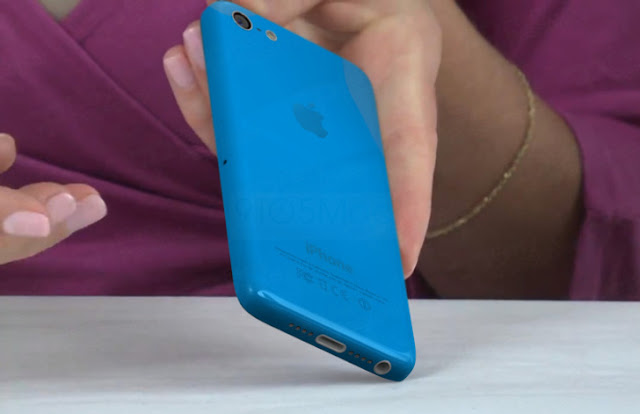
Plastic iPhone case
Image credits to iFixit

ASRock 990FX Extreme9 Motherboard Ready for 5 GHz CPUs


ASRock has quite gladly revealed that it has a motherboard perfectly suited for the strongest central processing unit that Advanced Micro Devices has to offer. And that says more than some might think.

The FX-9590 central processing unit that AMD launched some time ago isn't the sort of chip that can work on just any platform. Or at least, it's not the sort of chip that can work at full throttle, because 5 GHz require a measure of energy and endurance. That is why ASRock is making such a big deal out of getting official support for AMD's processor on the 990FX Extreme9 motherboard. The platform was put through a number of tests that were meant to determine build quality. The BIOS was also updated to work with the unit. To prove its claims, ASRock has published some benchmark tests results. The score was of 8.55 on Cinebench R11.5, for example. That's 25% better than the AMD FX-8350. On the Super PI 1MB test, the speed was 18.377 seconds.

Alsom on PC Mark Vantage, the score was of 18,894 points, which suggests a boost of 15.31% compared to the previous-generation chip. Add to that a PC Mark 8 Home Score of 4,777 points and you have a winner. Sure, Intel's best Haswell chips are still better, and we won't even mention the Ivy Bridge-E that haven't come out yet, but for an AMD CPU, the FX-9000 Series rule. For those who want a rundown of the ASRock motherboard specifications, ASRock uses four PCI Express 2.0 x16 slots (3-Way CrossFireX and 3-Way SLI supported), four DDR3 memory slots, a bunch of SATA 6.0 Gbps ports and all the connectivity and I/O elements one would expect. Finally, ASRock implemented a 12+2 Power Phase design, Hi-Density Power Connectors, Dual Stack MOSFETs, Premium Gold Caps, and Multiple Filter Caps. The product page has more info.

ASRock 990FX Extreme9
Image credits to ASRock

ASRock benchmark result
Image credits to ASRock

Dell Project Ophelia, An Android PC on a Stick


The Android operating system started out as a smartphone OS, then extended to tablets and, not too long ago, actual laptops and PCs, though not to any great extent. The OS just isn't made for PCs and doesn't have much of a chance to supplant Windows.

It can still do a lot though, especially on hardware that is just too weak for Windows. And since Windows RT hasn't seen much success, there's no threat from that end either. That's why some notebooks and smart TVs have been using Android quite a lot lately. That still leaves a lot of people that don't have smart features on their television sets though, and then there are those who want an easy way to carry around their system, not counting the laptop options. So Dell came up with Ophelia. Project Ophelia is essentially a USB stick that, instead of Flash Storage, holds a full Android PC. Priced at $100 / €100, it is now in final testing stages, if we're reading what PCWorld wrote right.

Primarily envisioned for business use, it is, nonetheless, likely to be adopted by consumers as well. The USB stick offers an application stack similar to those found on tablets and phones. Just plug it in your monitor or TV and voila! Instant computer. The Android device even has set-top-box and gaming console capabilities. Not on the same levels as the genuine articles perhaps, but close. Everything down to app downloading from the Google Play store is supported, and we don't just mean apps specifically designed for the device. Dell’s cloud portfolio of services is instantly accessible once the Android PC-on-a-stick is activated, plus Wyse PocketCloud. Remote shutdown and wipe capabilities are included as well.

All in all, the Dell project Ophelia really doesn't look like it, but it actually packs all PC features inside a flash drive-size package. Currently, Beta testers are receiving their sticks, which means that mass availability could ramp up later this year, between August and October.

Dell Project Ophelia
Image credits to PC World

Twitter Delicious Facebook Digg Stumbleupon Favorites More

 
Design by Free WordPress Themes | Bloggerized by Lasantha - Premium Blogger Themes | coupon codes
`