JustForex
Loading recent posts...

Jan 21, 2015

Qualcomm Remaining 2015 Roadmap Leaks, Snapdragon 820 Ready to Rock


While we are still waiting for Qualcomm to start shipping out batches of its high-end Snapdragon 810 chip to device manufacturers like Xiaomi and LG, the chip-makers roadmap for the second half of 2015 has already leaked.

Twitter account @leaksfly has managed to get ahold of information that reveals what we can expect from Qualcomm throughout this year. For starters, the successor of the “current” Snapdragon 810 will be the Snapdragon 820. Its purported specifications reveal two major differences. Traditionally, Snapdragon chips are based on Krait CP cores, but the transition into 64-bit territory happened to come at the same time with the end of life for Krait. So the Snapdragon 810 was released without its own custom core. But the Snapdragon 820 appears to be the first custom model to take advantage of 64-bit CPU cores under the Taipan architecture.

The silicone bit should arrive in an octa-core formation with eight TS2 high-performance cores. The second important change is that with the Snapdragon 820, Qualcomm will be transitioning to 14nm FinFet manufacturing, which will bring about visible improvements in performance and overall efficiency. Samsung and GlobalFoundries will be in charge of the production. The Snapdragon 820 will also come equipped with new Adreno 530 GPU, faster LPDDR4 RAM and add support to MDM9X55 LTE-A Cat.10 Qualcomm modem. But wait, there are more chips we have to look forward to in 2015.

Snapdragon 815
This platform is an octa-core design which nestles four TS1 cores and four TS2 ones in a big.LITTLE setup. The GPU inside is the Adreno 440 while modem and RAM stay the same as with the Snapdragon 820. However, the Snapdragon 815 will be forged on a 20nm process.

Snapdragon 620, 625 and 629
All these three chips will end up powering mid-range mobile devices. The Snapdragon 625 and 629 look quite similar, coming with an octa-core configuration with Adreno 418 GPU, LPDDR4 RAM and a lower-class MDM9X45 LTE-A Cat.10 modem. They will be manufactured using a 20nm HKMG Samsung/GF process.

Snapdragon 620, 625 and 629
All these three chips will end up powering mid-range mobile devices. The Snapdragon 625 and 629 look quite similar, coming with an octa-core configuration with Adreno 418 GPU, LPDDR4 RAM and a lower-class MDM9X45 LTE-A Cat.10 modem. They will be manufactured using a 20nm HKMG Samsung/GF process.

The Snapdragon 620 is a quad-core chip which uses Qualcomm Taipan cores clocked between 2 and 2.5GHz and LPDDR3 RAM. The platform will support Adreno 418 GPU and MDM9X45 LTE-A Cat.10 modem. Apart from that, the Snapdragon 620 is identical to the other models in the 62x family.

Snapdragon 616
Last but not least, we have the Snapdragon 616 which takes advantage of eight ARM Cortex A53 cores clocked between 1.8 and 2.2GHz with Adreno 408 GPU. The SoC has LTE-A Cat.6 modem and will be manufactured on a 28nm HKMG by Semiconductor Manufacturing International Company (SMIC). Qualcomm really seems to have a full agenda in 2015 and hopefully the silicone maker will be able to pull together and resolve the over-heating issues of the Snapdragon 810 once and for all.

Qualcomm's 2015 roadmap leaks
Image credits to @leaksfly

Jan 14, 2015

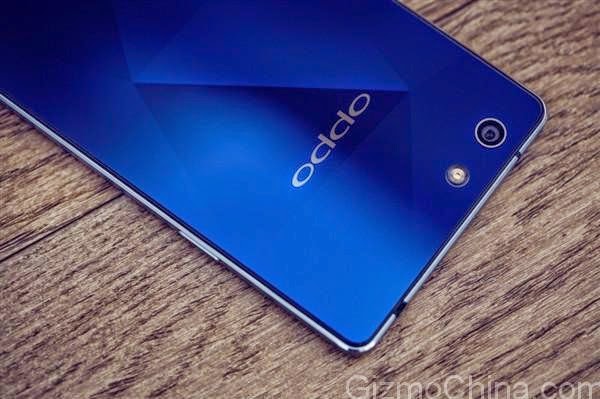
Oppo R1C Is Here with Sapphire Display, Snapdragon 615 and $400 Price


Just like we were telling you a few days ago, today Oppo took the opportunity to unveil the new R1C smartphone, which is basically a refresh of the Oppo R1S.

The most appealing feature of the handset is that it is offered with a sapphire glass display. While major tech players in the industry like Apple have yet to offer products taking advantage of the indestructible technology, Asian companies have gotten a head start in this department. Yesterday we talked about one of Apple’s suppliers, Desay which recently unveiled the Magical Mirror X5, a handset which offers a sapphire display for a budget price tag.

Oppo R1C boasts sapphire glass
Anyway, going back to the Oppo R1C, the handset makes a debut into the wild with a 5-inch display and boasting 1280 x 720 pixel resolution, as reported by Gizmo China. Pumping power into the whole shenanigan is a new octa-core Snapdragon 615 CPU clocked at 1.5GHz fitted with 2GB of RAM and 16GB of internal storage. Luckily, there’s a microSD slot onboard, so those who feel they need more storage can go ahead and bump things up to 128GB of internal storage. The Oppo R1C dons a 13MP snapper on the back that uses a Sony IMX214 sensor with an f/2.0 aperture, so the part where you can take decent low-light pictures is covered. Up front, a 5MP snapper will feed your needs for selfie taking.

The handset survives off a decent 2420 mAh battery, but Oppo doesn't say how much we should expect the smartphone to last on a single charge. The company’s proprietary Color OS 2.0.1 is present on the handset, which is a tweaked version of Android 4.4 KitKat. We also have to mention that the handset is pretty sleek, boasting a thickness of just 6.85 mm / 0.26 inches. It’s not the skinniest you’ll see on the market, but it’s quite anorexic nevertheless. To compare, Samsung just unveiled its thinnest smartphone to date, the Galaxy A7 which enjoys a profile of 6.3 mm / 0.24 inches.

As we told you above, Oppo will offer a variant with a sapphire glass display plus 4G connectivity and dual SIM support. Expect the device to go on sale starting January 20 for an approximately $403 / €342.


Oppo R1C launches
Images credits to Gizmo China

Jan 13, 2015

DDR4 Memory Record Set by G.Skill DDR4 RAM


The DDR4 memory technology is relatively young at the moment, with only a select few ultra high-end workstation motherboards even having support for them. Those powered by the X99 chipset from Intel.

This does, however, mean that all the tools needed to perform great overclocking feats are already available. Which is to say, a powerful chipset (the X99 we already mentioned), good mainboards based on them (in this case the ASUS Rampage V Extreme), and a mighty central processing unit (the Intel Core i7-5960X). All these things came together recently and enabled G.Skill to set the new record in terms of DDR4 performance, leading the clock of its best Ripjaws to 4,255 MHz while latencies were of CL 18-18-18. The CPU-Z validation has already been submitted and acknowledged.

For comparison, the previous record was 4,032 MHz on an MSI X99S SLI PLUS motherboard, set by Kingston HyperX modules. Liquid nitrogen had to be used for the overclocking run, however, so don't try this at home unless you have access to the same resources. Normally, DDR4 operates at 2,133 MHz. But when even DDR3 can go above 4.5 GHz, you can be sure that enthusiasts and PC hardware companies themselves will do all they can to bring DDR4 well above that level.

G.Skill Ripjaws DDR4
Image credits to G.Skill

CPU-Z validation of the record performance
Image credits to G.Skill

Jan 12, 2015

Oppo’s Upcoming R1C Handset Could Feature Sapphire Glass, Snapdragon 615 SoC


Just a day before Xiaomi’s big event where we expect to see the handset maker launch its latest flagship, the Mi5, Oppo will be doing some unveiling of its own.

The device maker also has a new smartphone to show us, which goes by the name of U3 and its most important feature is that it comes with a 4x optical zoom on the rear 13MP camera. However, Oppo might have another model in the pipeline. It’s called the R1C, and according to Gizmo China, it could come boasting a stylish crystal glass on the back. For the time being, word on the street claims that the device will arrive with a 5-inch 720p display and take advantage of an octa-core Snapdragon 615 processor fitted with 2GB of RAM, but we can't be sure just yet that all is accurate.

Other known specs so far include a 13MP on the back and 5MP frontal camera, 16GB of internal storage (expandable via microSD card) and LTE connectivity. The handset is said to be scheduled for launch on the same date as the Oppo U3, meaning January 14. The first month of 2015 seems to be a very busy one for Chinese OEMs, so sit back relax and let yourself be wowed by Asia’s latest monsters. Check out the preliminary images featuring the R1C in the gallery below.


Oppo R1C
Images credits to Gizmo China

Xiaomi Mi5 First Sample Images Leak


We have been telling you about the impending Xiaomi Mi5 launch for a while now. The company’s next flagship device is expected to be rolled out on January 15, but as we wait on that, the first camera samples taken with the handset have leaked online.

The images have allegedly been posted by Xiaomi’s co-founder and have been picked up by Gizmo China. The images have been snapped between December 7 and December 11 with a resolution of 4208 x 3120 pixel resolution. The device is expected to launch in two colors, with the front and back being made of glass materials. The handset is expected to arrive with a 5.2-inch / 5.5-inch display with QHD resolution (2560 x 1440 pixel resolution) and a Snapdragon 805 under the hood (although previous rumors would have us believe we were dealing with a Snapdragon 810 instead).

Recent leaks have also suggested the Xiaomi Mi5 will probably be very thin, coming in with a 5.1mm / 0.2 inch profile. Thus the handset will turn out to be even sleeker than the iPhone 6 which currently has a 6.9 mm / 0.27 inch frame. Anyway, in a few days the Xiaomi Mi5 will most likely go official and then we’ll know all the official details. Recent rumors indicate that along side the Mi5, Xiaomi will probably also unveil the Redmi Note 2.


Xiaomi Mi5 picture sample
Images credits to Gizmo China

Phanteks Enthoo Mini XL, A Case That Can Hold Two Computers


Computers can become really powerful all on their own, especially the ones that have more than one graphics card, or even two CPUs, but there is one step further that can be taken: combining two PCs into one. That is what Phanteks sought when it made the Enthoo Mini XL.

Technically speaking, making a “double” computer system would be as simple as using one of those dual-socket XL-AYX or E-ATX motherboards. But that still leaves the computer with a single suite of I/O ports, a single operating system, a single entity basically. Phanteks wanted to make it possible for there to be two distinct systems in the same computer chassis, so it made the Enthoo Mini XL.

The Enthoo Mini XL full tower case
Normally, a full tower can hold a mini-ITX (however pointless it would be to outfit it with one), a micro-ATX or a Full-ATX motherboard. The Enthoo Mini XL can hold such a motherboard, as well as a second, exclusively mini-ITX platform on the upper side. You could call it the epitome of multitasking efficiency, since it lets you use a low-key system to browse the net and such, and start the second, high-end system when you want to play a game, design a game or CGI video, produce a CAD model for a 3D printable object, etc. With the help of normal LAN interfacing, you would be able to exchange data between the two systems easily as well.

The rest of the case space will have to be shared between them though. There are three 5.25-inch drive bays, two stacks of 4-tray 3.5-inch bays (which can be adapted for 2.5-inch drives), and room for a tall radiator (if you detach the bays that is). What won't have to be shared is the power supply (not that it would be possible in any case). There are two power supply bays, a full ATX one and a small form factor SFX bay.

Availability and pricing
The Phanteks Enthoo Mini XL should show up for sale soon, and the price is of $180 / €155. Somewhat on the high side, but not on par with enthusiast, gaming models since the company has to get people sold on the idea first, and a higher price wouldn't help its case much. Now all that’s left to wonder about is whether or not this concept will be applied to laptops someday. Some might say that 2-in-1 tablet/notebook drives are it, but other possibilities shouldn't be discounted out of hand. The video below is of the case is it was back in May 2014. Phanteks has been working on it for quite some time it seems. Gallery below, click for larger image.


Enthoo Mini XL
Images credits to TechPowerUp


Enthoo Mini XL
Images credits to Phanteks


Enthoo Mini XL
Video credits to Phanteks

Samsung Galaxy A7 with Metal Unibody Goes Official, Thinner than iPhone 6


Samsung introduced the Galaxy A3 and A5 handsets a while ago, but we were still waiting for the top-tier of the line to go official.

The Galaxy A line marks Samsung’s commitment to affordability and a stylish metal-clad design. The family arrives to take the place of the Galaxy Alpha, a potent smartphone that sadly sells for quite a lot.

Say hello to the Galaxy A7
Anyway, the highest-specced handset from the Galaxy A line is the A7 and Samsung just made it official a few hours ago. The device has been making rounds online since a few weeks back, but now we can see it as it truly is. The A7 arrives in the wild with a 5.5-inch Super AMOLED display with 1280 x 720 pixel resolution. There are two versions customers can have a pick at: the LTE one is equipped with an octa-core Exynos 5430 chip (four cores clocked at 1.8GHz while the other four operate at 1.3GHz) from Sammy’s own garden and an LTE/3G dual SIM variant with a 64-bit cota-core Qualcomm Snapdragon 615 chip (four cores working at 1.5GHz and fourth clocked at 1.0GHz).

The Galaxy A7 is fitted with 2GB of RAM and 16GB of internal storage (expandable via microSD card). Apart from that, users will also be able to enjoy the perks of two cameras (13MP on the back and 5MP up in front), Wi-Fi 802.11 a/b/g/n, Bluetooth 4.0, USB 2.0, A-GPS+GLONASS, NFC – only the LTE model has this feature). The handset’s life is sustained by a sensible 2600 mAh battery. Strangely enough, Samsung has bundled the handset with Android 4.4 KitKat, but we guess an update to Android 5.0 Lollipop is also in the cards at some point.

The Galaxy A7 is quite gracious
The Galaxy A7 is one of Samsung’s thinnest handsets to date. It’s even sleeker with 3 mm than the iPhone 6. It weighs 141 g / 0.31 lbs and is 151 mm / 5.9 inches tall and 76.2 mm / 3 inches wide. The handset will be made available in black, gold and white, but the pricing and availability options remain a mystery for now. However, Samsung says the device will have a “competitive price point.” 

Press Release:Summary:
Samsung introduced the Galaxy A7, one of the slimmest Galaxy smartphones equipped with premium hardware for a superior social experience, expanding on the popular services provided by the Galaxy A5 and A3.
Samsung Introduces Galaxy A7 for a Seamless Social Experience
Latest Galaxy smartphone also offers a larger display and more powerful performance
Samsung Electronics unveiled the new Galaxy A7, one of the slimmest Galaxy smartphones equipped with premium hardware for a superior social experience. Combining powerful multitasking performance with sophisticated design, the Galaxy A7 expands on the popular services provided by the Galaxy A5 and A3, enabling users to capture and share every moment seamlessly on their social media platform.
“We strive to develop devices that appeal to a broad range of consumers and are ahead of the next big social trend,” said JK Shin, CEO and Head of IT & Mobile Communication at Samsung Electronics. “Combining both a stunning metallic design and a powerful performance, the Galaxy A7 is stylish while delivering the superior user experience.”
Setting a New Standard for Social Interaction
The Galaxy A7 is equipped with a multicore processor combining two separate quad core processors, enabling users to quickly and easily perform data intensive tasks. The Galaxy A7 has 16GB of memory and 2GB of RAM to power all of a user’s favorite apps and media, and is supported by a long-lasting 2,600mAh battery.
The Galaxy A7 also supports the intuitive features and services offered by the Galaxy A5 and A3, with an advanced 5 Megapixel front-facing camera and advanced selfie features including ‘Ultra Wide Shot’ and ‘Auto Selfie’ modes, which make it possible to take a photograph using only a voice command or even a simple wave of the hand. The device also features ‘Always Clear Voice Auto Control’ to reduce noise from the surrounding environment, as well as LTE Category 4 support for quick and easy photo and video uploads on any social network. In addition to these features, the Galaxy A7 offers a Private Mode, which adds an extra layer of security for important files and documents. The A7 also has Multi Screen app function capability.
Superior Samsung Galaxy Design at a Competitive Price Point
The Galaxy A7, Galaxy A5 and Galaxy A3 are designed for those who want to express effortlessly their unique style. With these devices, Samsung continues to focus on creating smartphones equipped with the slimmest metal unibody on the market today, with comfortable grip for ease of use. The range empowers users to choose a device which reflects their personal style and lifestyle needs, not just in terms of their unique features, but also their size and color options.
Samsung Galaxy A7 gallery below, click for larger image


Samsung Galaxy A7 in gold

Samsung Galaxy A7 in white


Samsung Galaxy A7 black


Samsung Galaxy A7 white

Samsung Galaxy A7 complete specification sketch
Images credits to Samsung Tomorrow

Nov 20, 2014

Chaintech and Colorful Release iGame Z97 High-End Motherboard


As odd as it sounds, motherboards intended for gaming aren't necessarily the same as those intended for overclocking, even though some companies, like MSI, like to implement their best OC features on them anyway.

Overclocking means going overboard with clock tweaking and being prepared for a total meltdown. Gaming means (though some may disagree) getting the most performance you can out of your system without actually needing to start messing with the factory settings of the CPU. Especially since the GPUs determine a lot of how well a game runs. You might be safe pushing the chips a bit above the norm, but not to the point where you can set any records. Chaintech and Colorful wanted a motherboard that was equally good at both, however, so they made the iGame Z97 and even gave it water blocks for cooling.

Featuring the LGA 1150 Haswell-ready socket, it offers such things as dual-BIOS, a 16-phase VRM, 8-channel HD audio, three PCI Express 3.0 x16 slots, four PCI Express 2.0 x1 slots, six SATA III ports, mSATA (one port) and three video outputs (DVI, D-Sub and HDMI). Of course, the video ports will be mostly useless since buyers will no doubt buy an NVIDIA or AMD add-in board or more along with it. Unfortunately, while I do know that Chaintech intends to release the iGame Z97 LGA 1150 motherboard in Europe and APAC markets, I don't have an ETA or the price.

iGame Z97 LGA 1150 motherboard PCI Express slots
Image credits to TechPowerUp

iGame brand propagates

iGame Z97 LGA 1150 motherboard socket

iGame Z97 LGA 1150 motherboard water block

iGame Z97 LGA 1150 motherboard PCI Express slots
Images credits to 3DNews

Meizu MX4 Pro Officially Introduced with 5.5-Inch Quad HD Display, Exynos Octa-Core CPU


The Chinese smartphone market seems to be dominated by local OEMs rather than other brands like Samsung, LG, Motorola, HTC or Sony.

Instead, customers in the Mainland prefer devices made by Xiaomi, Huawei, Lenovo, Meizu, Oppo, Gionee or ZTE. In fact, big handset makers like Samsung lost important chunks of market share to these Chinese OEMs, which are now thinking to go international with their products. One such native OEM, Meizu has just announced its new flagship smartphone, the MX4 Pro. For those out of the loop, this is the sequel to the recently launched MX4 which was launched in China back in September. Meizu MX4 quickly became one of the most popular Android smartphones in China, which is probably one of the reasons that made the company confident that an even better device will be more popular than the original model.

Regardless of how Meizu reached the conclusion that launching two flagship smartphones in a matter of a few months would be a great idea, the fact remains that the new device announced by the Chinese company is likely to become best-seller in the Mainland. Dubbed Meizu MX4 Pro, the new smartphone has been stuffed with the latest technologies available on the market. More importantly, the device has been priced at only $410 (€325) outright, which offers incredible value to the smartphone.

On paper, it may be the most powerful smartphone on the market

First of all, the MX4 Pro boasts a stunning 5.5-inch NEGA LCD display that supports Quad HD resolution, 546ppi (pixel per inch) and 450 nits. The smartphone comes in three variations: 16GB, 32GB and 64GB. We’ve already mentioned the price for the cheapest version, so if you want the other two, you will have to come up with $440 (€350) or $510 (€405), respectively. That will be an important choice, as Meizu MX4 Pro lacks microSD card slot. On the inside, Meizu MX4 Pro is a beast. The Chinese company decided to go for Samsung’s Exynos 5430 octa-core chipset, which accommodates a quad-core 2GHz Cortex-A15 processor, another 1.5GHz quad-core Cortex-A7 CPU and a Mali-T628 MP6 graphics processing unit.

In addition, the smartphone is packed with 3GB of RAM and an impressive 20-megapixel rear-facing camera made by Sony, which features 4K video recording, autofocus, LED flash and f/2.2 aperture. Meizu MX4 Pro runs Flyme OS 4.1 which is based on Android 4.4.4 KitKat and it’s powered by a non-removable 3,350 mAh battery. The flagship smartphone will be available for purchase in China beginning December 6, but there are no details on availability outside this country.

Meizu MX4 Pro

Meizu MX4 Pro QHD display

Meizu MX4 Pro display detailed

Meizu MX4 Pro display size

Meizu MX4 Pro front upper part

Meizu MX4 Pro

Meizu MX4 Pro (left side)

Meizu MX4 Pro (left side angle)

Meizu MX4 Pro display

Meizu MX4 Pro (bottom side)

Meizu MX4 Pro (Home button)
Images credits to Meizu

Twitter Delicious Facebook Digg Stumbleupon Favorites More

 
Design by Free WordPress Themes | Bloggerized by Lasantha - Premium Blogger Themes | coupon codes
`