JustForex
Loading recent posts...

Jul 1, 2015

New Microsoft 2.0: No Windows Phone, Android Devices, AMD Owner


Back in 2014, when Satya Nadella replaced Steve Ballmer at the new helm of Microsoft, he pushed the company in a major reorganization process that was supposed to finally help it explore the mobile-first, cloud-first world and provide it with a better opportunity to expand beyond software.

Nadella not only helped Microsoft adopt a more gentleman approach, giving up on some of the projects launched by his predecessor (such as Scroogled), but also put the focus on Windows and cloud, thus trying to concentrate on the products that actually generate more revenue for the company. After having fired 18,000 people following the Nokia Devices and Services unit, and having reorganized the company to work as “One Microsoft,” Nadella is now getting ready for a new series of changes. Tough changes, as he explained in a letter sent to company employees last week.

But before anything, keep in mind that most of these changes are still in the rumor stage and Microsoft doesn’t want to comment on them. And it’s no wonder why. Nadella needs to plan the company’s transformation closely, and every single bit of information that leaks to the web could affect this plan.

No more Windows Phone?
Recent information coming from people with a good track on early Windows changes suggests that Microsoft could give up on Windows Phone entirely, which was something that some people predicted after Nadella’s mail last week. Windows Phone was one of the products that weren’t even mentioned in Microsoft CEO’s email, and many people rushed to speculate that it was because the mobile OS wasn’t part of future plans.

"Google Play devices in exchange for Maps on Windows 10"

And now, according to new rumors, Windows Phone was indeed out of Microsoft’s long-term vision, but what’s more, they indicate that Redmond could join forces with Google for some sort of never-seen-before collaboration. Microsoft was said to be planning “Google Play devices,” which some believe could mean that Redmond could replace Windows Phone with Android. Google, in its turn, could bring its products, such as Maps and Gmail, on Windows 10, and thus provide users with desktop access to its key services.

Interested in buying AMD
Also recently, Microsoft has been linked with a potential acquisition of AMD, as the company was looking to expand in the hardware industry. Basically, rumor has it that Microsoft attempted to build its own chips for devices such as Microsoft Surface, but because the resulting products weren’t exactly what the company expected them to be, it decided to purchase a company that specializes in building hardware to easily expand in this side of the market.

Buying AMD isn’t a financial problem for Microsoft, as Redmond has an operating income of $95.3 billion in cash, while AMD is at approximately $1.81 billion, so it’s pretty clear that, if it really wants to buy the company, the software giant would have no problem doing it.

"Building more hardware would make Microsoft a direct competitor to its own partners"

But then there’s the question of hardware investments. With Surface tablets, Microsoft became a direct competitor to its partners and started fighting for the same buyers with companies that were until then bundling Windows on their devices as part of licensing deals with Redmond. But suddenly, Microsoft started selling devices that were competing with theirs, so it’s no surprise that many were disappointing to see the company going in that direction.

The same could happen if the AMD deal goes through, and there’s no doubt that Nadella needs to plan this strategy in every little detail. All in all, Microsoft’s transformation continues and the new Microsoft is becoming the newer Microsoft, with the focus now switching to software and services and less on hardware. The next 12 months will be decisive for this strategy, so it remains to be seen if Redmond is indeed prepared to embark on such a new challenging mission.

Microsoft Logo
Image credits to Mocrosoft

Meizu MX5’s Helio X10 Performance Overtakes the Snapdragon 810’s in Benchmarks


Back in January 2015, we told you that benchmarking specialist AnTuTu announced their top most powerful Android phones of 2014. Interestingly enough, the Meizu MX4 took the number one spot and tore into the competition by delivering 47,765 points.

Other phones like the Nexus 6, Samsung Galaxy Alpha and Samsung Galaxy Note 4 trailed behind the Meizu device. Well, today, the Chinese company has rolled out its next-gen flagship device, which arrives in the wild as the MX5, so naturally, you’re probably curious to know what sort of performance it will be capable of delivering. The answer to that question was offered during the launching event for the MX5 hosted by Meizu in Asia. During the presentation, it was revealed that the Meizu MX5 managed to score an impressive 53,330 points in AnTuTu (as spotted at Phone Arena).

The MediaTek Helio X10 chip is no joke
The result is quite impressive and comparable to what other competing flagship currently on the market today offer. If we’re to look at AnTuTu’s top 10 performance smartphones of Q1 2015, we can see that the Samsung Galaxy S6 managed to score 67,520 points, while the Galaxy S6 Edge grabbed 62,373 points. Both these flagships are powered by the Exynos 7420 chipset, which was manufactured by Samsung itself. However, the Meizu MX5 performs better than the HTC One M9, which is powered by the Snapdragon 810 platform. It also overtakes the Nexus 6 and Samsung Galaxy Note 4, two powerful devices that saw the light of day in 2014.

It seems like the Exynos 7420 will continue to maintain its role as the most powerful chipset of this year. As we saw a few days ago, even Qualcomm’s next-gen Snapdragon 820 couldn’t match up to Samsung’s beast. Anyway, Meizu’s new MX5 arrives bundled with MediaTek’s brand new Helio X10 SoC working in concert with PowerVR, 3GB of RAM, and 64GB of native storage.

The phone made a debut with a 5.5-inch AMOLED display with 1080 x 1920 pixel resolution and 401ppi. Meizu also throws in a super powerful 20.7MP camera that takes advantage of Sony’s new sensor technology plus a 5MP snapper living up in front. The flagship ships out with Android 5.0 Lollipop out of the box, but hopefully, Meizu will push out the Android 5.1 Lollipop update at some point in time.

Meizu MX5 tested in AnTuTu
Image credits to PhoneArena

AnTuTu showing top of most powerful devices in Q1 2015
Image credits to AnTuTu

Meizu MX5 frontal image
Image credits to Meizu

Meizu MX5 has fast chargingImage credits to Meizu

Meizu MX5 is a dual-SIM deviceImage credits to Meizu

Jun 30, 2015

iOS 8.4 Officially Released with Apple Music, Messages Bug Fix


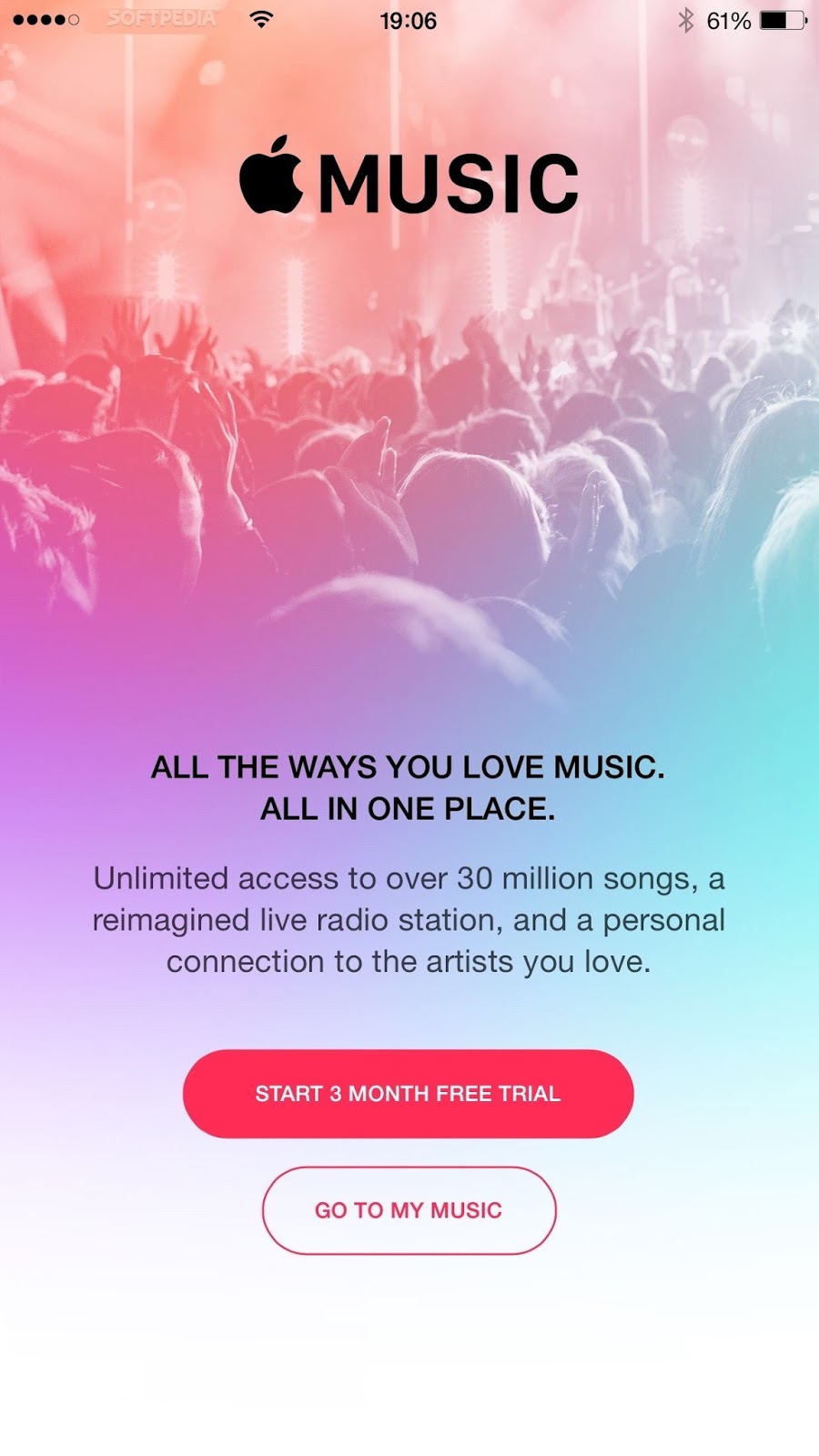
Apple has just started seeding the final version of the iOS 8.4 mobile operating system for iPhone, iPad, and iPod touch devices worldwide, a major release that includes the highly anticipated Apple Music service.

Unveiled earlier this month during Apple’s WWDC (Worldwide Developers Conference) 2015 event, Apple Music is here to offer you a revolutionary music streaming service, a 24/7 global radio, as well as a way for music fans to connect with their favorite artists more easily. According to the internal release notes, which you can read by pressing the "Learn more" button under the iOS 8.4 update, by becoming an Apple Music member, you'll have access to millions of songs that you can listen to offline whenever you want. The new music service offers playlist and album recommendations that have been handpicked by Apple's music experts from all over the world, access to the latest and greatest new music, interviews, as well as exclusive radio shows on Beats 1.

Apple Music members will also be able to share music, photos, and videos from their favorite artists. You can also join conversations with other fans and share your thoughts on the matter..

Completely redesigned Music app
iOS 8.4 also introduces a redesigned Music app that boasts all-new features like MiniPlayer, Recently Added, Up Next, and many more. Please note that some features may or may not be available in your country. Moreover, iOS 8.4 brings various improvements to the iBooks app, such as the ability to browse, listen to, and download audiobooks from within the application, as well as a brand-new Now Playing feature designed specifically for audiobooks.

Among other under-the-hood improvements, iOS 8.4 addresses various issues that some users encountered with GPS accessories, repairs a problem with deleted Apple Watch apps, and fixes the famous iOS Messages app bug that could crash your device when a crafted text message with some specific Unicode characters was received.

iOS 8.4 released

iOS 8.4 update

Apple Music

Start 3 months trial

Apple Music trial

Two trials are available

Don't Miss a Beat

Music app - Radio

Music app - Connect

Music app - Playlist

Music app - New

Music app - Genres
Images credits to Apple


Meizu MX5 Is Now Official with Metal Body and Advanced 20MP Camera


As was heavily anticipated for the past few months, Chinese device manufacturer Meizu has just pulled the veil off its latest flagship smartphone, called the MX5.

Meizu has become a pretty strong presence in the domestic ecosystems thanks to premium devices like the MX4 and MX4 Pro, but also value phones like the M1 Note, and recently the M2 Note. Today, the device maker is introducing its latest premium offering which arrives with a full metal build. The phone makes a debut with a 5.5-inch AMOLED display capable of 1080p resolution (1920 x 1080 pixels) and an upgraded (compared to the MX4 Pro) 64-bit octa-core MediaTek MT6975 chipset fitted with 3GB of RAM and 32/64GB of internal storage (good news, there’s a microSD card slot for memory expansion). Meizu also throws in a 20MP main camera that takes advantage of a Sony sensor with laser autofocus, plus a quite capable 8MP front-facing camera that will certainly snap the selfies you have been dreaming of.

Sorry folks, no Android 5.1 Lollipop for now
The phone ships out with Android 5.0 Lollipop out of the box with Flyme 5.0 overlay on top, but we should expect to see Meizu push out the Android 5.1 Lollipop update at some point in the future. Under the hood lies a 3,150 mAh powerhouse which is in charge of keeping the device alive. Meizu has also bundled the smartphone with the so-called mCharge tech, which basically offers fast charging and can juice up 25% of battery in only ten minutes. Sounds pretty neat! The phone is also quite sleek, boasting a 7.6 mm / 0.29 inch frame and breaking the scales at only 149 g / 0.32 lbs.

Last but not least, we should mention that the device arrives with a fingerprint scanner embedded in the home button. Anyway, the Meizu MX5 looks pretty sleek, so you are probably wondering how much money you need to save up to get your hands on it. The basic 16GB version will go on sale for a pretty affordable $290 / €259, while the 32GB version can be yours for $322 / €288. The premium 64GB version will be offered for $387 / €346.

Meizu MX5 launches today

Meizu MX5 has a metal build

Meizu MX5 comes with fingerprint scanner

Meizu MX5 bundles fast charging

Meizu MX5 is a dual-SIM phone

Meizu MX5, frontal look

Meizu MX5, bottom view

Meizu MX5 in profile
Images credits to Meizu

Windows 10 Build 10158 Now Available for Download


Microsoft has recently rolled out Windows 10 build 10158 to users enrolled in the fast ring of the Windows Insider program, giving them the option to try out one of the most refined versions of Windows 10 so far.

Most of the enhancements the company has introduced in this build are aimed at improving the overall performance of Microsoft Edge, the new browser that is replacing Internet Explorer in Windows and Project Spartan in preview builds. Edge finally makes its debut in build 10158 and comes with options to bring a home button that can be added via Settings > Advanced Settings > Show the home button. This was one of the most requested features in previous builds, Microsoft says.

Edge can also import favorites and bookmarks from other browsers, there are options to tweak the first screen when launching the app, as well as new customizations for the New Tab page, as you’re now allowed to choose to either see top sites and suggested content or only top sites. Microsoft Edge also comes with its very own password manager and form-fill support, and you can also drag and drop tabs to a new window, just like in Chrome and Firefox. Edge obviously features the dark theme we’ve seen in leaked builds, but also support for background audio, so sounds will keep playing when the browser is minimized or in the background.

Other improvements
Build 10158 also boasts other small tweaks, such as Cortana improvements and a dark theme for the personal assistant, the ability to send emails, and direct integration with Office 365. The Photos app has received its own bunch of enhancements, including support for GIFs, again one of the top requests from testers. And last but not least, there are also some subtle improvements that will make working on the desktop easier. Microsoft explains:

“On the Taskbar, when an app needs your attention, it will now flash in orange. And when you download something or move files around in File Explorer, the progress animation in the Taskbar has been changed back to green and back to animating horizontally (instead of white and animating vertically seen in the previous build - thanks for the feedback!).” As usual, you can get this new build via Windows Update if you are a Windows insider or wait for it to reach the slow ring and then perform a clean install with the new ISOs.

The new Windows 10 build is available via Windows Update for fast ring users
Image credits to Microsoft

Jun 29, 2015

Microsoft Might Drop Windows Phone, Will Adopt Android OS Instead


It looks like Microsoft's Windows Phone business is losing more money than anyone would have expected. We can't imagine other reason for which the Redmond-based company would consider moving away from Windows Phone and start pushing Android devices instead.

But that is a point of view offered by Microsoft leaker @MSFTNerd who just tweeted some interesting tidbits of info that suggest a real earthquake for Microsoft's mobile business. Apparently Satya Nadella is about to decide whether or not Microsoft will continue investing in Windows Phone handsets and small tablets. If the company decides to drop Windows Phone, then it will continue to bundle its services on Android smartphones and tablets. Microsoft might also push its own Android smartphones and tablets on the market, which will also contain some of the most important mobile apps and services offered by the Redmond-based company.

The future might not be so bright for Windows Phone
In return, Google will offer some of its “first-class” services on Windows such as Maps, YouTube and Search, @MSFTNerd claims. Moreover, Microsoft is said to consider changing its relationship with Google in the matters of location services, as well as video on Windows and ads. The last part proved to be accurate, as Microsoft has just announced that it has unloaded its display ad business, which has been bought by AOL and AppNexus. The move will also result in the loss of 1,200 jobs among Microsoft employees. Following the agreement between Microsoft, AOL and AppNexus, the Redmond-based has officially stopped being a meaningful competitor for Google in the display ad business.

Still, dropping the Windows Phone in favor of Android would be a much harder decision for Microsoft, especially that the company is now readying for the Windows 10 Mobile launch and at least a few high-end smartphones. It looks like the next couple of months will be decisive for Microsoft's mobile business, as the company can't afford to continue to bleed money.


MSFTNerd tweet
Images credist to @MSFTNerd

Nokia Android Smartphones Manufactured by Foxconn Coming to India, China & Europe


While Nokia's CEO Rajeev Suri has already confirmed that his company is determined to return to the smartphone business, he did not share details on when and where the Finnish company would launch its first device.

Nokia can't enter the smartphone market with its own product until 2016 due to the acquisition agreement with Microsoft, but once that embargo is lifted, we expect the ex-handset maker to come in full force with a range of new smartphones. After going all out with Windows Phone operating system, Nokia is now expected to launch new Android smartphones, after the failed Nokia X series experiment that seems to have been completely buried by Microsoft. Until then, Nokia is now selling its amazingly popular Android tablet, the N1. Sadly, the slate is only available in a few countries (China, Taiwan), but we expect it to go on sale in additional countries in the coming months.

The first Android smartphones are likely to be low-end
According to NokiaPowerUser, sources familiar with Nokia's plans claim the Finnish company will launch its first smartphones as early as next year. They will be powered by Google's Android mobile platform and will be manufactured by Foxconn. Nokia has already partnered with the Chinese company for the release of N1, so it makes sense to continue to collaborate with one of the largest handset/tablet manufacturers. The same source say the first Nokia smartphones powered will be launched in China, India and some European countries. Judging by the selection of markets, there's a high chance that these Nokia Android smartphones will belong to the low tier.

Nokia is also said to debut its marketing campaign, as well as official product websites by the end of this year, so we should have more details on the company's Android smartphones in the next couple of months.

Nokia Android smartphones
Image credits to Nokia

Snapdragon 820 Gets Benchmarked, See How It Performs


Back at MWC 2015 in Barcelona, Qualcomm teased the successor of the notorious Snapdragon 810 chipset, called the Snapdragon 820.

We were told that the SoC would take advantage of the company’s own custom-designed 64-bit CPU cores, dubbed Kyro, and in recent days, it was revealed these cores would be clocked at up to 3.0GHz. Well, this week, the Snapdragon 820 popped up in benchmarks, although the traces have been wiped clean since then. Luckily, the folks at My Drives (via GSM Dome) have managed to capture a screenshot showcasing the results in the benchmark tests. We’ve recently told you that the Snapdragon 820 will be built using Samsung’s 14nm node manufacturing technology, the same that was used in the construction of the Exynos 7420 powering the Samsung Galaxy S6. So, let’s see how the new silicone performs.

Will the Snapdragon 820 clear Qualcomm's name?
Snapdragon 820 was put through the Geekbench test, where it scored 1,732 points in the single core test and 4,970 points in the multi-core test. Now, let’s see how these results compare to the Snapdragon 810 inside the Xiaomi Mi Note Pro and the Exynos 7420 fueling the Samsung Galaxy S6. The Snapdragon 820 beat the single-core results of the Exynos 7420, which managed to score 1,486 points, and of the Snapdragon 810 that only grabbed 1,227. As for the multi-core test, the Snapdragon 820’s 4,970 topped its predecessor, which scored 4,424 points. However, it failed to tower over the Exynos 7420 and its 5,284 score.

Even so, judging by these test results, it seems that the Snapdragon 820 will be able to deliver decent performance, a lot better than the Snapdragon 810 at least. We expect the first mobile devices powered by Snapdragon 820 to start making an appearance on the market soon enough. Xiaomi’s next-gen flagships, the Mi5 and Mi5 Pro, are both rumored to make a debut with a Snapdragon 820 under the hood.

Word on the street has it that LG is also working towards a ramped-up version of its current flagship, which will arrive in the wild as the G4 Pro and will bundle a Snapdragon 820 on the inside.

Snapdragon 820 shows up in benchmarks

Exynos 7420 benchmark results

Snapdragon 810 benchmark results
Images credits to MyDrivers

Jun 23, 2015

Meizu MX5 Shows Impressive Performance in Leaked Benchmark


Chinese company Meizu is expected to unveil its next flagship smartphone, the MX5, on June 30. A launch event has already been confirmed for that date and invitations have been send to the local media.

We also know that the MX5 will feature a metal body, courtesy to some pictures that leaked a few days ago. Last but not least, the latest rumors claim Meizu's high-end smartphone will be launched in China for just 1,799 yuan, which is about $290. Some of the phone's specs have been leaked as well, but these leaks haven't been followed by any confirmations from the Chinese company. Well, it looks like a benchmark of the Meizu MX5 that's been recently spotted in Geekbench shows the smartphone is capable of great multi-core performance. Unfortunately, things are a bit different when it comes to single-core performance, but rest assured that you won't experience any lags while browsing the phone's menu.

Meizu MX5 will be equipped with a 64-bit octa-core MediaTek MT6795T Helio X10 processor, which scored no less than 5352 points in the multi-core benchmark.

Single-core benchmark results are a bit behind the competition
That's close to Samsung's Exynos 7420, which is considered one of the best processors available on the market. Qualcomm's Snapdragon 810 is nowhere near this performance and that's probably due to the chipset's overheating issues. When it comes to single-core performance, the Meizu MX5 shows disappointing benchmark results, way below Samsung's Exynos 7420.

Nevertheless, it's good to know that Meizu MX5 will perform decently in any condition, thanks to it high-end specs sheet. Speaking of which, the MX5 is expected to pack 3GB of RAM and a 20-megapixel camera on the back. The smartphone is said to feature a 5.5-inch capacitive touchscreen display that supports full HD (1080p) resolution, and a non-removable 3,150 mAh battery.

Meizu MX5 benchmark results
Image credits to Geekbench

Elephone P9000 Could Be First to Arrive with MediaTek Helio X20 Deca-Core


Things are getting pretty wacky in the mobile chipset ecosystem. Not so long ago, MediaTek announced the advent of a deca-core silicone piece which would bear the name of Helio X20.

This is a 20nm chipset equipped with a pair of ARM Cortex-A72 cores sustaining the heavy duty operations, four ARM Cortex-A53 managing the medium load, while four Cortex-A53 cores will deal with the low-power operations. Apparently, MediaTek is striving for a chip that’s energy efficient and not a benchmark ripping behemoth, although at least on paper, two Cortex-A72 cores seem quite menacing. Anyway, MediaTek is poised to release the Helio X20 sometime in the fourth quarter of 2015, and now a new report coming out of WebCusp reveals that the Elephone P9000 could end up being the first device to take advantage of the 10-core monster.

The chipset inside the phone will work in combination with an ARM Mali-T800 series GPU clocked at over 800MHz with 4GB of RAM on board (note that the MT6797 is limited to LPDDR3 RAM, however). The Elephone P9000 will also take advantage of a 5.5-inch 1080p display, 32GB of expandable storage, a 20.7MP main camera (probably made by Sony), a 8MP selfie snapper, and a 3,100 mAh battery under the hood.

The source goes on to mention that the phone could go on to make a debut on the market for $500 / €439 a pop. Expect the phone to debut in October with Android 5.1 Lollipop on board.

Teaser image of Elephone P9000

Elephone P9000 might come with MediaTek's deca-core Helio X20

The benefits of a tri-cluster assembly
Images credits to Webcusp

Twitter Delicious Facebook Digg Stumbleupon Favorites More

 
Design by Free WordPress Themes | Bloggerized by Lasantha - Premium Blogger Themes | coupon codes
`