JustForex
Loading recent posts...

Jun 11, 2013

Linksys Powerline HomePlug AV2 Kit


To get Internet, people need either a 3G modem, a Wi-Fi router or an Ethernet cable. Either way, a data carrier needs to be involved.

Home networks don't necessarily need Internet connection though, and they don't really need to rely on LAN cables either. Powerline AV adapters can make for a good substitute. All it takes to set up a network is to plug at least two of them in standard power sockets and voila! Home networking. Linksys has just introduced a Powerline AV kit, called Powerline HomePlug AV2, or PLEK500. It has a speed of 500 Mbps (Internet speed will still be limited by the source though).

The HomePlug AV2 has a Gigabit Ethernet port to connect to whatever Internet grid the neighborhood has.  Linksys.com and major retailers are selling the kit for $129.99 / €99 – 129.99.

Powerline HomePlug AV2
Image credits to Linksys

NVIDIA Tegra 4i-Powered Smartphone Emerges


NVIDIA’s Tegra 4i chipset looks set to make an appearance in commercially available smartphones in the not too distant future, as the company has already started to showcase a device powered by the chip, one that comes from a yet unnamed ODM.

Spotted over at AnandTech, the handset sports a large 4.8-inch 720p display and a 13-megapixel photo snapper on the back, while expected to land on shelves sometime in the first quarter of the next year.  Furthermore, the Android 4.2.1-based smartphone is said to pack LTE / HSPA+ connectivity that could be used in a variety of regions, and to land on shelves in 8GB / 16GB / 32GB versions, priced somewhere between $300 - $400 (€226 - €301).

Apparently, other Tegra 4i-based devices are also being developed, even some with prices set lower than what this handset will feature.


Tegra 4i-based smartphone
Images credits to AnandTech

TP-LINK Archer C7 Wireless Dual Band Gigabit Router


Dual-band routers seem to be coming out all the time lately, with enough frequency that we find it hard to bat an eye anymore. Even the companies behind them seem to share some of that view, TP-LINK included.

We say this because the makers of wireless routers have reached the point where only very high performance makes their inventions stand out anymore. Case in point, there used to be a time when 750 Mbps was considered a high throughput for a dual-band router, but now we're getting 1.75 Gbps rates. TP-LINK has introduced the AC1750 Wireless Dual Band Gigabit Router, otherwise known as Archer C7.  Archer C7 happens to communicate at 450 Mbps over the 2.4 GHz band and 1,300 Mbps over the 5 GHz frequency. The 802.11 ac standard allows for such high limits.

The external antennas (three) and the three internal antennas provide omni-directional coverage, while Dual USB ports allow printers and files from removable storage devices to be shared between all electronics linked to the network. Security isn't forgotten either. TP-LINK implemented Guest Network Access.  "Routers are the hub of the digital home and business. As more smart devices enter the scene, consumers need a smart router solution that can deliver speed and range, ease-of-use, solid security, and enable them to access their data wherever they are," said Lewis Wu, country manager for TP-LINK USA.

The three external 5 dBi antennas are detachable and serve the 5 GHz band. The fact that they are separated from the three 2.4 GHz internal ones helps reduce co-channel interference. In addition to all this, the Archer C7 comes with dual multi-functional USB 2.0 ports and four Gigabit LAN ports. The price of $149.99 corresponds to €113 – 149.99 in Europe. Find more in-depth technical information on the product page.

TP-LINK Archer C7
Image credits to TP-LINK 

Jun 10, 2013

SK Hynix 8Gb LPDDR3 RAM for High-End Mobile Devices


Future high-end smartphones might indeed become as powerful as laptops and other computers are today, given that SK Hynix has already announced 20nm 8Gb (1GB) LPDDR3 chips for inclusion in devices before the end of the year.

The company’s chip is said to provide data transmission speed of 2,133Mbps, and to support high density of maximum 4GB (or 32Gb) packages, while featuring a thinner profile and less power consumption in standby when compared to LPDDR2. The company also announced that the new 20nm RAM could be provided in forms that include ‘PoP’ (Package on Package), as well as in a single package with ‘eMMC’ (embedded Multi Media Card).

SK Hynix expects high density LPDDR3 memory products over 2GB to be included in top-level mobile devices in the second half of the year.

SK Hynix intros new high-density RAM for top-level mobile devices
Image credits to Engadgety

Creative Sound Blaster Cards Lose THX Logo


Creative had a really tight partnership with THX until a while ago, and probably still maintains a collaboration.

It's no longer essential though, because Creative has its own audio software now: SBX Pro Studio. It is this software that now ships with the Sound Blaster Recon3D sound cards. Speaking of which, a new card collection is out: Sound Blaster Z series. And somewhere in limbo between Sound Blaster Recon3D and Sound Blaster Z rests the Sound Blaster Recon3D r2. It's essentially the Recon3D but with the new software.

That means it has a Sound Core3D native-PCIe chipset, Cirrus Logic-made DAC, 5.1-channel output, 24-bit resolution, 102 dBA SNR, a dedicated 600 Ω headphones amplifier, 96 kHz sample rates, and OpenAL hardware-accelerated audio API support. It also gets EAX 5.0 Advanced HD and compatibility with Windows 8.

Creative Sound Blaster card
Image credits to Creative

Colorful iGame GTX Titan Ultra Edition with Subzero Cooling


Since the GeForce GTX Titan graphics card from NVIDIA is already an overpowered beast, it takes special conditions to push it even higher.

After all, the better a video card, or a processor of any type really, runs, the more heat it generates. Solid capacitors and strong VRMs can help keep things stable, but it ultimately falls to the cooler to keep things from melting. Knowing this, Colorful equipped the iGame GeForce GTX Titan Ultra with the best water cooler it could think of. The biggest hint that this isn't a normal water cooler is the compressor assembly inside a separate case the size of a micro-ATX tower. The dual-slot waterblock is a really awe-inspiring sight too, as is the pair of insulated refrigerant pipes.

It's interesting to note that the waterblock covers both sides of the PCB, instead of just one. Between all that and the phase-change cooler (the same principle as deep-freezers), the temperature can be driven as low as 50 degrees Celsius while the GPU operates at 954 MHz / 1,006 MHz (default/boost) and the 6 GB of GDDr5 at 6 GHz.


Colorful iGame GTX Titan Ultra
Images credits to gdm

64-bit ARM Servers Ready by Year's End


The issue of ARM-powered servers has mostly been skirted around, but it looks like there's nothing that can be done about the momentum of the technology.

Much as Intel might hate the thought of its customers looking elsewhere, at least some of them will adopt 64-bit ARM processors for servers by the end of 2013. Currently, there are two major ARM-based server processor suppliers in the enterprise market: Marvell and Calxeda. The former supplies chips for Dell, while Calxeda has HP as primary client. There's also Applied Micro, which, along with Calxeda, shows off 64-bit ARM chips at Computex 2013.

Taiwan-based Mitac International and some companies from China will release processors by the end of 2013 as well. It is all building up towards a nice race that will definitely disrupt the chains of deals on the IT market.

Calxeda ARM processor module
Image credits to Calxeda

Jun 9, 2013

Nokia Lumia 925T Goes Official in China


Nokia Lumia 925, the latest Windows Phone 8 smartphone from the Finnish mobile phone maker, is set to become available for purchase in China in the not too distant future, and has been already made official in the country as Lumia 925T.

The handset will arrive on shelves at China Mobile in the country, offering support for the wireless carrier’s TD-SCDMA network, GSMInsider reports. The phone sports the same specs as the Lumia 920T before it, but with a series of design changes, including an aluminum frame wrapped around its edges.

Lumia 925 features a 4.5-inch HD+ display, a 1.5GHz Snapdragon S4 dual-core processor, 1GB of RAM, 16GB of internal memory, an 8.7-megapixel photo snapper on the back, front camera for making video calls, and a 2000mAh battery. Nokia’s new smartphone will arrive in China in black, white and gray on June 17. It will be launched at China Unicom too, as Lumia 925. Nokia will offer free Superman “Man of Steel” cases to the first 925 buyers.

Nokia Lumia 925T at China Mobile
Image credits to GSMInsider

Samsung Galaxy S4 Zoom Leaked Photos Emerge


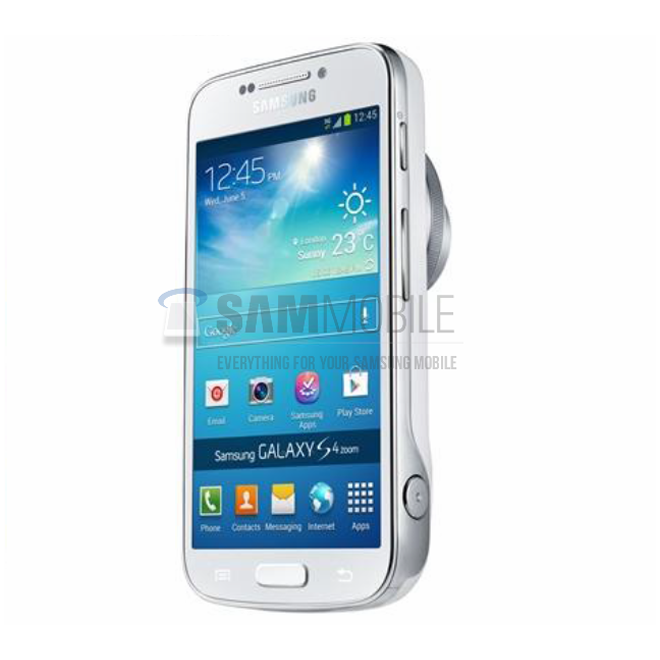
South Korean mobile phone maker Samsung Electronics has been long rumored to plan the launch of high-end camera phone in the Galaxy S4 series, one that would sport the name of Galaxy S4 Zoom, and what appear to be leaked photos with the smartphone are now available online.

The handset, rumored to be officially unveiled on June 20 during a press event in London, has already received the necessary approvals from the FCC, which suggests that its market availability is nearing fast.  The leaked photos with the device, available courtesy of SamMobile and TechTastic, show that it will actually be more of a camera with phone capabilities than a smartphone with high-end camera features, which could disappoint some users, that’s for sure.

The handset also appears to arrive on shelves with a dedicated shutter button on the right side, along with a dedicated tripod mount on the left.

Samsung Galaxy S4 Zoom Leaked Photos
Image credits to SAMMobile


Samsung Galaxy S4 Zoom Leaked Photos
Image credits to techtastic.org

Windows 8.1 RTM to Launch on August 1


Microsoft hasn't said a thing about the release date of Windows 8.1 RTM, but we've seen quite a lot of people talking on social networking services about a potential August 1 launch event.

Also citing insiders, Paul Thurrott of WinSuperSite says that since the operating system is called Windows 8.1, it would be natural to see it going live on August 1 (8/1), but we should really take this with a pinch of salt. Even though previous reports indicated that Windows 8.1 could hit RTM in August or September, Microsoft would most likely wait for the holiday season, as the company also expects a new wave of products, be they laptops, PCs, hybrids, or tablets, to support the launch of the new OS.

September or October seem more likely to witness the launch of Windows 8.1, especially because the Softies also need some time to gather feedback sent by users who try out the preview build and then tweak the stable build. Time will prove it, but one thing is for sure at this point: the preview version will be here on June 26.

The Preview will go live in just a few weeks
Image credits to Microsoft

Twitter Delicious Facebook Digg Stumbleupon Favorites More

 
Design by Free WordPress Themes | Bloggerized by Lasantha - Premium Blogger Themes | coupon codes
`