JustForex
Loading recent posts...

Oct 26, 2011

New Info on BBX-Enabled BlackBerry Colt Available


In the coming months, Research In Motion should unveil to the world its first devices running under the newly announced BBX mobile operating system, and BlackBerry Colt is one of the devices that should be included in the series, most probably the first of them.

We already had the chance to learn some info on the upcoming mobile phone, and now we can have a closer look at the new device, courtesy of a series of details that emerged over at n4bb

The forthcoming BlackBerry Colt smartphone should arrive on the market with a large 4-inch or larger touchscreen display, and with a fast 1.2GHz application processor beneath it. 

Apparently, this would be the same 1.2GHz Snapdragon MSM8655 chip as the one available on the BlackBerry 7-powered handsets, although some suggested that Colt might include a dual-core CPU. 

The upcoming handset will also be able to deliver a high-resolution on that touch-enabled screen it will include, and is also said to arrive on shelves with no physical buttons. 

Moreover, the new mobile phone will include dual-cameras., which means that there will be a front facer for users to take advantage of when making video calls. 

The smartphone will run under the BBX operating system, which was made official not too long ago, and which puts together the current BlackBerry OS with the BlackBerry Tablet OS. 

The handset will also bring along TAT transitions coupled in BBX, which translates into a great experience for end users. 

BlackBerry Colt is said to be thinner than the current Bold 9900, 9930 smartphones, and should pack a similar battery as the PlayBook which means that there will be no more battery pulls when it arrives on shelves.

All in all, it appears that the BlackBerry Colt might not turn out to become the superphone that we were previously expecting it to turn out, and that it will be targeted mainly at the mid-level market.


ADATA Launches SandForce-Based XM13 mSATA SSD


ADATA has been doing quite well in the SSD market lately thanks to the introduction of a series of powerful mSATA drives, and the company has recently announced the launch of another such solution which is known as the XM13.

The drive was first spotted at this year's Computex fair together with other mSATA solid state drives the company has to offer.

The XM13 is however the most powerful of these as its built around a first generation SandForce SF-1200 controller which supports a SATA 3Gbps interface.

In ADATA's latest creation, the SF-1200 is paired together with four 25nm multi-level cell NAND Flash memory chips manufactured by IMFT (a joint venture between Intel and Micron).

This setup can provide either 30GB or 60GB of storage space, and, even though some of the memory channels available were left unpopulated, the drive is capable of reaching sequential transfer rates of up to 250MB/s read and 170MB/s write.

Random read/write throughput is rated at 12,500 IOPS (input/output operations per second), while MTBF is set at 1.2 million hours. ADATA estimated the shock resistance of the XM13 to 1500G/0.5ms, which makes it extremely durable.

The Taiwanese company has designed the XM13 to be used in tablet, ultra-thin notebooks and other highly portable devices, as well as a cache drive for an HDD using Intel's Smart Response Technology.

In fact, Gigabyte has even certified the drive to be used together with a series of the company's motherboards based on the Intel Z68 chipset that feature an mSATA slot, the Z68XP-UD3, Z68XP-D3, Z68AP-D3 and Z68P-DS3.

Pricing for the 30GB version of the XM13 varies between $70 to $80 (50 to 57.5 Euros), while the 60GB version retails for $125 to $135 (90 to 97 Euros).


Nokia Lumia 800 Now Official


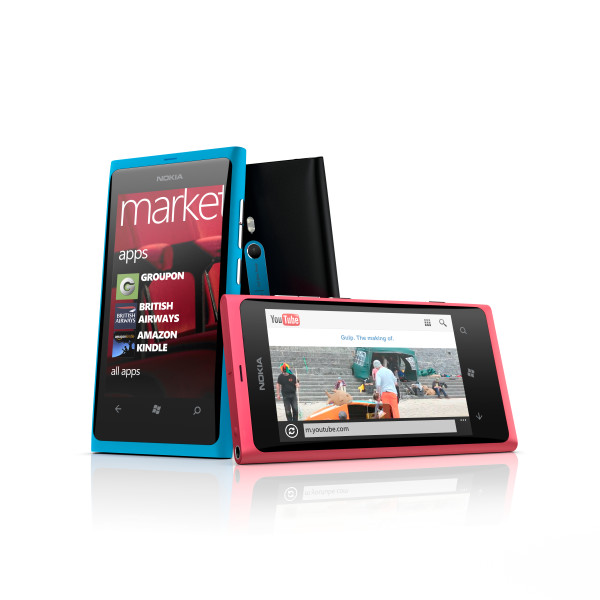
Finnish mobile phone maker Nokia has just made their first handset running under the Windows Phone platform official, none other than the Nokia Lumia 800. 

Nokia CEO Stephen Elop has just made the device official, stating that this is the first “true Windows Phone,” which takes full advantage of “the design sensibilities of Windows Phone.”

The new device will arrive on the market with the same looks as the Nokia N9, and should be released in three color flavors, namely Cyan, Black and Magenta. 

The phone packs premium features and capabilities, being described as a beauty in the outside, and as a beast on the inside, bring also capable of great performance capabilities, just as one would expect from this handset. 

It comes with high-end features of Nokia devices, including a great camera and that unique interface on Windows Phone.


Nokia Lumia 800 Full Specs and Price Unveiled

Nokia Lumia 800, “the first true Windows Phone,” as Nokia's CEO Stephen Elop claims, will be available on the market in three color options: cyan, magenta and black.

The Finnish company also revealed some release dates for the Lumia 800, along with the smartphone's suggested retail price of 420 EUR ($585).

Nokia Lumia 800 will be available in the UK, Spain, France, Germany, Italy and the Netherlands beginning November for the price mentioned above.

Furthermore, the phone is also expected to arrive in Hong Kong, India, Russia, Singapore and Taiwan toward the end of the year, while China will get it in early 2012.

Nokia Lumia 800 has the same form factor and design as the MeeGo-based Nokia N9 smartphone, which doesn't come as a surprise, given that first spy shots of the Lumia 800 confirmed this aspect.

As a matter fact, all details about the phone's specs have been pretty much confirmed today during the Nokia World Conference.

So, to recap for those who are still unfamiliar with the device, Nokia Lumia 800 is powered by a single core 1.4 Ghz Qualcomm MSM8255 processor and runs Microsoft's Windows Phone 7.5 Mango operating system.

As expected, the handset lacks a microSD card slot for memory expansion, but offers 16GB of internal memory, 512 MB of RAM and 25GB of free SkyDrive storage for storing images and music..

It has a 3.7-inch AMOLED capacitive touchscreen based on Nokia's ClearBlack technology, which supports 16 million colors and 480 x 800 pixels resolution.

The 8-megapixel camera on the back is among the strong points of the phone. It features Carl Zeiss optics, autofocus, dual-LED flash and HD (720p) video recording capabilities.

Nokia Lumia 800 is now available in select countries for pre-order via Nokia's site.


Nokia Lumia 710 Also Official


In addition to the Nokia Lumia 800, Nokia also unveiled the Nokia Lumia 710 smartphone running under Microsoft's Windows Phone operating system. 

The new device will arrive on shelves in black and white with black, white, cyan, fuchsia and yellow back covers, and should include features similar with those packed inside Lumia 800.

It will include the same 1.4GHz application processor as the Nokia Lumia 800, so as to offer great performance capabilities at an affordable price tag. 

The new device is expected to arrive on shelves with replaceable back covers that will range from all Windows Phone theme colors. 

“The purposely built, no-nonsense Nokia Lumia 710 can be personalized with exchangeable back covers and thousands of apps to bring the Lumia experience to more people around the world,” Nokia notes. 

“The Nokia Lumia 710 is designed for instant social & image sharing, and the best browsing experience with IE9.” 

The same as the Nokia Lumia 800, the new device will include Nokia Drive, a full-fledged personal navigation device (PND) with free, turn-by-turn navigation, and with Nokia Music, the new services that Nokia announced today.

It will also include MixRadio, a free, global, mobile music-streaming application, along with Gigfinder, so that users can easily find live local music. 

The new device will arrive on shelves before the end of the ongoing year in Hong Kong, India, Russia, Singapore and Taiwan, and should be pushed to more markets in early 2012. 

Ultimately, the new handset should be pushed to 31 operators and retailers in 6 countries, Nokia announced. Nokia Lumia 710 is expected to sport a price tag of around 270 EUR ($375) when made available for purchase.

“In addition to the existing products, which include coverage for WCDMA and HSPA, Nokia also plans LTE and CDMA products to address specific local market requirements,” Nokia announced. 

The company also said that it plans on launching portfolio of products into the US in early 2012, and should also bringing it to mainland China in the first half of 2012.


Full Specs of Nokia Lumia 710 Available


Nokia Lumia 710 is the second Windows Phone device that Finnish handset vendor Nokia unveiled to the world today, and some more info on what it packs inside has just emerged, courtesy of Nokia's official websites. 

The same as the Nokia Lumia 800, the new device arrives on the market with a 3.7-inch touchscreen display, and with a fast 1.4GHz application processor for increased performance capabilities.

The new device also sports 512MB of RAM, along with 8 GB of internal memory, expandable with micro-SD card to up to 24 GB (it supports memory cards of max 16 GB).

Considering the fact that Nokia Lumia 800 does not offer the possibility to expand the available internal memory, it sounds great that Lumia 710 will provide users with this ability.

The specs list of this device also includes a 5-megapixel photo snapper on the back, with auto-focus, LED flash and video recording capabilities.

Nokia Lumia 710 was also packed with WLAN IEEE 802.11 b/g/n and Bluetooth 2.1 +EDR connectivity, as well as with 3.5mm AHJ Connector and USB 2.0 High-Speed port.

The new device also packs USB Mass Storage capabilities, along with support for WCDMA, EDGE Class B, GPRS Class B, HSDPA Cat10 14.4 Mbps and HSUPA Cat6 5.76 Mbps.

The handset is powered by a 1300mAh battery that can deliver up to 6.9 hours of talk time, or up to 400 hours of standby time.

The new device also offers appealing capabilities powered by the Windows Phone operating system, including Notes, Calendar, To-do list, detailed contact information, or the HTML5-enabled Internet Explorer 9 mobile browser and Bing.

In the People's Hub, users will find various means to stay connected at all times with their friends and family, including Facebook, Twitter, LinkedIn, email, Chat, and SMS.

The new device is expected to become available in a number of 6 markets in the near future, and should hit the shelves at over 30 carriers and retailers. It will feature a price tag of 270 EUR ($375) before taxes.


Office 2007 Service Pack 3 (SP3) RTM Available for Download


Office 2007 Service Pack 3 (SP3) RTM is now available for download from Microsoft. For the time being, office 2007 customers will need to head over to the Microsoft Download Center and manually install the upgrade. 

It’s worth noting that SP3 is just a standard service pack release for Office 2007, meaning that there are no new features or functionality introduced. 

Instead, the software giant focused on resolving a range of issues that still impacted Office 2007 following the advent of SP2. 

For example, Office 2007 SP3 brings to the table all the cumulative updates and public updates released after SP2. This means that customers which deployed all Office 2007 refreshes already have the vast majority of SP3 improvements. 

Here are some additional enhancements that the Redmond company highlighted:
  • “Documents that require custom security trimming are not returned from alert search queries, even if the user who created the alert could see and query for these documents. 
  • Non-Unicode characters in certain error message strings now display correctly. 
  • Four new bibliography styles are now available in the "Word Citations & Bibliography" feature: Harvard Anglia, IEEE, APA Sixth Edition, and MLA Seventh Edition. 
  • Chinese New Year holiday is now included in the Outlook calendar for Singapore.”


As users must be aware, Office 2007 shipped only in a 32-bit (x86) variant, and it wasn’t until Office 2010 that Microsoft also provided a 64-bit (x64) version of the productivity suite. This means that the Download Center is offering only the 32-bit version of Office 2007 SP3 RTM.

Microsoft has yet to wrap up the delivery process of Office 2007 SP3, which just started with the availability of the bits on the Download Center. 

The upgrade is also served through Microsoft Update to all customers with Automatic Updates enabled, but only to customers that already deployed all Office Automatic Updates. 

According to the software giant, the distribution process of Office 2007 SP3 through AU will only start 90 days from now. 

 Microsoft also revealed some of the issues that were dealt with in SP3:
  • “Fixes an issue in which Excel 2007 sometimes crashes when you open an Excel workbook previously saved in a newer version of Excel. This occurs if the file uses a new feature that is not available in the 2007 Office system.
  • Fixes issues with the Pre and Post Reform rules in the French Thesaurus.
  • Fixes an issue in which encryption settings are not configurable when they are used with a file format compatibility pack converter and Office 2003 or an earlier version of Office.
  • Fixes an issue in which a crash sometimes occurs when an Excel workbook is opened in Excel and then previewed by using the Windows Explorer preview pane feature.
  • Fixes an issue in which Excel Slicers and Ribbon customizations are lost when an XLSX file is first saved as an ODS file, and then saved as an XLSX file in Excel 2007.”


The 2007 Microsoft Office Suite Service Pack 3 (SP3) is available for download here.

Oct 25, 2011

Nokia's Lumia 710 and Lumia 800 Emerge Ahead Launch


Today, Finnish mobile phone maker Nokia is expected to make official its first smartphones running under Microsoft's Windows Phone operating system, and two of these have just mad an appearance into the wild in leaked official photos. 

We're referring here to the Nokia Lumia 710 and Lumia 800 Windows Phones, both of which can be seen in a newly leaked photo, available courtesy of Pocketnow.

Both of these devices have been spotted into the wild before and most of their specs have been already leaked on the Internet, yet they are still unofficial, and should remain so for a few hours more. 

Nokia Lumia 710 and Lumia 800 should address the mid-level market, yet they both pack appealing features, along with great outer designs. Today, both of them will become official, at least this is what most of the reports on the matter suggest, so stay tuned for more on them.


IDT Gets Its Technology Used by Samsung Galaxy Tab 10.1


The Samsung Galaxy Tab 10.1 is making the news for something other than a lawsuit this once, or perhaps it would be more accurate to say that a certain company is getting attention for having had its invention chosen as a component of said slate.

With about as much enthusiasm as one would expect, Integrated Device Technology, Inc., IDT for short, announced that Samsung has called on its services.

Basically, from now on, the company will contribute to the making of the Samsung Galaxy Tab 10.1 tablet.

More specifically, the 70P255 low power 8K x 16 Dual-Port Static RAM (DPSRAM) will be used in the tablet's construction.

This device provides a pair of independent ports which, with their asynchronous access, let any location on the memory be written onto or read from.

What's more, a slate's baseband processor (BP) will have all it needs to work in tandem with the application processor (AP).

An extra asset of the IDT 70P255 is the automatic power down function, which enables a standby mode (3/6 mW).

Obviously, a mobile device that puts much stock on battery life will see this as all the more reason to integrate the component.

"We are pleased that Samsung Electronics, a leading mobile device provider, has selected IDT's DPSRAM for this innovative product," said Arman Naghavi, vice president and general manager of the Analog and Power Division at IDT. 

"Our industry-leading low power memory products complement our highly efficient power management and world-class timing solutions. We look forward to continuing to support Samsung with our broad portfolio of mixed-signal solutions."

The Galaxy Tab 10.1 tablet is already selling around the world, except in those areas where Apple was successful in getting a ban.

The injunctions in Australia and Germany are the two big blows that Samsung was hit with, and the US situation is looking slippery.


DotA Guide: King Leoric - The Skeleton King Introduction


DotA is the most popular custom made map for Warcraft III. To give players a better idea of this complex and sometimes complicated game here is a hero guide.

The Skeleton King is a strength hero that has received lots of tweaks and changes over time, with Reincarnation always remaining one of its main attributes. You can recruit him from the Scourge Strength Tavern.

Let's learn more about this hero's dark background: "Once a noble knight protecting his kingdom, the man was thrown into Hell, where he was ripped apart over and over for centuries. 

Now, Lucifer has thrown him back onto the soil, corrupted and mindless, as King Leoric, the Skeleton King. He marches on, leading his minions with an unfaltering gaze, knowing only one thing: the orders given to him by the dark lord himself. 

Able to cripple his opponents with a powerful magical hammer, King Leoric is a major threat on the battlefield. His mighty blade allows him and others in his presence to drain the blood of their enemies. 

It is said that he is unkillable, and those who are struck down by his hammer don`t wake up again."

Impressive strength with low agility and intelligence, make this hero to posses incredible skills:

Hellfire Blast (Shortkey T) - King Leoric hits his target with a flaming fist that stuns for 2 seconds and slows the target for 2 seconds. It also damages for 50/100/150/200 damage while during ignition will deal 15/30/40/60 damage/second.

Vampiric Aura (Shortkey V) - This skill will allow you to recover health while your enemies are loosing it. It basically steal life, with every strike, The King will receive 15/20/25/30% of the attack damage. As Critical Strike this is a passive skill that's always active.

Critical Strike (C) - This skill combined with Vampiric Aura are one of Leoric's most feared weapons. When chosen it will provide the hero with a 15% chance to do 1.25/1.75/2.25/2.75 times the normal damage. This is a passive skill that's always active.

Reincarnation (R) - A signature skill of Leoric, this also passive skill allows him to ride from the dead with its HP and mana intact. While being resurrected, it will slow all opponents in a range of 700 with 30% for 3 seconds. 

Even in passive, this skills requires 140 mana, so if your hero has low mana, will be killed. Also make sure that you're not silenced when you die, or it will be for good.

Some of items that a Leoric should always keep in his inventory are: Power Treads, Armlet of Mordiggian, Satanic or Stygian Desolator or Sange and Yasha, Radiance or/and Battle Fury, Assault Cuirass, Monkey King Bar. Combine them the way you want to turn this hero into a big, mean killing machine.

So are the stories true? It Leoric really unstoppable? Play him and find out! If you have any other suggestions please let all the DotA fans know in a comment.


AMD Prepares Z-03 Low-Power APU for Tablet Devices


AMD's foray into the tablet market with the Desna APU has seen limited success, but this won't stop the company from releasing a successor for this low-power platform that will be comprised out of the Z-03 accelerated processing unit and of the A55T Fusion Controller Hub (FCH).

On a first look, the Z-03 seems to feature identical specifications with the Z-01 APU is meant to replace, but once we move in closely we come to see that AMD has managed to lower the TDP of this chip.

Compared to the 5.9W required by the Z-01, the new Z-03 has reduced this value to just 4.5W, while retaining the same dual processing cores clocked at 1GHz of its predecessor as well as its HD 6250 integrated GPU with 80 shader units clocked at 276MHz.

How AMD managed to achieve this feat is not yet known at the moment, but one possible explanation could be that this upcoming APU will be manufacturing using a much more power frugal 28nm fabrication node.

In addition to its accelerated processing core, AMD also revised the chipset used for this platform, the A55T.

Compared with its Desna counterpart, the A55T has lost some of the features that aren't required for tablet use such as the dedicated x4 PCI Express destined for connecting an standalone GPU or the USB 1.1 ports included.

Instead, the chipset now comes with a single SATA 3Gbps port, two channels HD audio, an x2 Unified Media Interface, eight USB 2.0 ports, and the ability to access an mSATA storage drive.

All these are joined together by SDIO support for WiFi as to enable the tablets designed around the platform to always remain connected to wireless networks, and an optimized design that doesn't require any active cooling.

According to the information supplied by ComputerBase, the Z-03 APU will enter mass production in late April 2012, just a few weeks after the A55T FCH, and is expected to arrive at about the same time as Microsoft's Windows 8 operating system.


AMD Trinity APUs Get Detailed, Include DDR3-2133 Support


In the first half of 2101, AMD will introduce its next-generation Fusion processors based on the Trinity architecture, and a recently leaked presentation slide has now come out to show us some of the new features that this APU will bring into the market.

The AMD document was uncovered by Donanim Haber and takes a look at the chip maker's Virgo platform and the Trinity APU.

As many of you know, Trinity is built around AMD's second generation of the Bulldozer core which is said to offer a 20% increase in performance over the current Llano architecture, while also bringing a series of new features into view.

These include support for th AVX and AES-NI instruction sets as well as the third version of AMD's Turbo Core technology that automatically adjusts the core speed depending on the number of threads run by the processor.

Much like in the case of Llano, the Trinity APUs will lack any sort of L3 cache memory as AMD wanted to save die space for the integrated Radeon GPU, but it does feature 1MB of Level 2 cache per core.

Since there can be as many as four computing cores in a Trinity APU, the chip tops out at 4MB of L2 cache memory.

In addition to the the switch to Piledriver, AMD also operated a few changes to the integrated memory controller that was now updated to feature support for DDR3-2133 memory and energy-efficient DIMMs that work with 1.25V.

The increased bandwidth available from the memory controller should have an important impact on the performance of the on-die GPU as Llano APUs see a great benefit when coupled together with fast DDR3-1866 DIMMs.

Speaking of the integrated graphics core, the document claims that this can deliver 30% better performance than Llano, while also coming with a new Video Compression Engine and support for AMD's EyeFinity technology.

The first Trinity APUs are expected to arrive in late Q1 or early Q2 2012, as the chips will enter mass production in January of next year. AMD has already sent out engineering samples of these chips to its partners.


Twitter Delicious Facebook Digg Stumbleupon Favorites More

 
Design by Free WordPress Themes | Bloggerized by Lasantha - Premium Blogger Themes | coupon codes
`