JustForex
Loading recent posts...

Jun 26, 2012

Coming in Q3: AMD 4GHz Vishera FX 8350


AMD’s Piledriver architecture is bringing a whole lot of improvements to the original Bulldozer core. In fact, Piledriver is exactly what Bulldozer was supposed to be when it was first launched a year ago.

Reported by FudzillaAMD is planning a Q3 launch for its Piledriver-based FX 8350 processor. We believe that if Piledriver’s enhanced clock mesh seen in Trinity is applied to the FX processors also, the highest clocked model will most likely surpass, or at least equal, the 4 GHz frequency. The SOI manufacturing enhancements, along with the architecture improvements brought by Piledriver, have managed to get AMD’s APUs from 2,9 GHz to a high 3,8 GHz. Llano’s top model was clocked at a base frequency of 2900 MHz, while desktop Trinity processors are expected to work at frequencies of around 3800 MHz. That’s a 31 percent frequency improvement. We don’t expect AMD’s FX Piledriver processors to have a base clock of 4,7 GHz, but we do see the possibility of a 4 GHz base clock that would represent only a 11 percent increase over FX 8150’s base clock.

The desktop Trinity processors have a usual maximum TDP of 100 watts, but on the high end AM3+ camp, a TDP of about 140 watts is quite high, but not unheard of. Basically, if AMD manages to get the same clockspeed improvements on the AM3+ platform as they did on the FM2 architecture, the new Vishera 32nm processors will be able to reach at least the 4 GHz mark. Back in the days of Pentium 4 we were used to hear uninformed amateurs say that they bought Intel processors because they were cool, lasted long and worked at a higher frequency. Once AMD manages to “hypnotize” buyers with its marketing team, the new Volan platform should achieve high sales on the same principle. The CPUs will work at very high frequencies and that’s a fact. The irony dictates that they will be just as “cool” as Pentium 4 used to be and will last longer than Intel’s Ivy Bridge CPUs, just as Intel’s Pentium 4 CPUs lasted longer than AMD’s Athlon64.

AMD's FX 8150 Processor
Image credits to Legitreviews

Test: 3 Tb/s Wireless


There is a great deal of expectation when we talk about the new wireless devices belonging to the novel 802.11ac standard. It was said that WirelessAC is the first “Gigabit Wireless” standard, but it seems that scientists are not satisfied with the results and are working hard at the “Terabit Wireless” standard.

We don’t see 802.11ac as true “gigabit wireless,” because when using a single antenna on the AP and a single antenna on the receiving device, only 0.4 Gb/s data rates can be achieved. So we could say that we’re not satisfied with the current WirelessAC standard either. Scientists at NASA and many other universities in China, US and Israel have reported by Gizmodo tested a wireless signal able to transfer data at an amazing 2.56 Tb/s data rate.

The teams were able to pack eight data streams in the same single signal using orbital angular momentum (OAM). The results were first published in Nature magazine.

orbital angular momentum graph
Image credits to Engadget

Acer Sandy Bridge NetBook


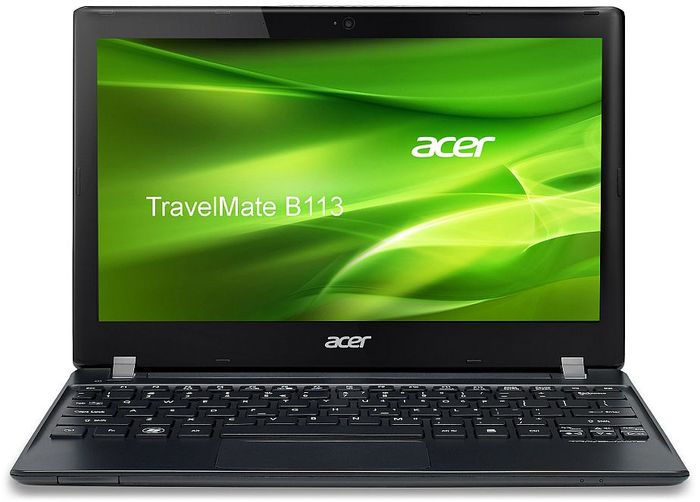
Acer has decided to build a decent netbook, and that’s probably detrimental to the usual battery life expected from netbooks in general. The new device is powered by a modest-performing Celeron B877 processor and features a 11.6” screen.

The new netbook from Acer, Fudzilla reported quite a bit heavier than the usual netbook, but unfortunately it doesn’t feature the useful DVD-Writer. In fact, the TravelMate B113 is heavy enough not to fit in the UltraBook category either, but that is also excluded by the device’s thickness. The TravelMate B113 is a very peculiar device. It doesn’t look like an UltraBook, can’t last as long as a netbook, and it doesn’t have a propped ODD drive just like any notebook should have. This is device clearly targeted for the cash-strapped buyers that need more performance than a netbook can provide, but that don’t mind the lower battery life and the lack of the ODD.

The new TravelMate B113 series feature 4 GB of DDR3 RAM memory, a 500 GB hard disk drive, Wireless N and USB 3.0 connectivity, along with HDMI and a 4400mAh battery. The screen features the mediocre 1366 by 768 pixel resolution and the whole thing weighs in at 1.88 Kg. That’s about 4.14 pounds, and it is clearly too much to be considered an UltraBook. In our humble opinion, Acer could have included an optical disc drive in the design, as there are quite a lot of laptops that come with an ODD in the €450 ~ €560 price range of the TravelMate B113. In US dollars, that is around $563 to $700, which is quite pricey by our standards. The more capable versions come with a 1.3GHz Pentium B967 or a Core i3-2377M working at 1.5GHz.

Acer TravelMate B113
Image credits to Fudzilla

Acer TravelMate B113
Image credits to Fudzilla

RSA SecurID bypassed, Access Cryptographic Keys only in 13 Minutes


Experts from France, Italy, the UK, and Norway have released the results of a study which demonstrates that the flaws present in many of the popular security devices, such as the RSA’s SecureID 800, can be leveraged to obtain the precious cryptographic keys.

In a paper called “Efficient padding oracle attacks on cryptographic hardware,” researchers Romain Bardou, Lorenzo Simionato, Graham Steel, Joe-Kai Tsay, Riccardo Focardi and Yusuke Kawamoto detail the vulnerabilities that expose the imported keys from various cryptographic devices that rely on the PKCS#11 standard. They describe the method they used, the padding oracle attack, as a “particular type of side channel attack where the attacker is assumed to have access to an oracle which returns true just when a chosen ciphertext corresponds to a correctly padded plaintext under a given scheme.” By creating an optimized version of Bleichenbacher’s attack, the researchers have been able to prove that tokens such as the RSA SecurID, the Aladdin eTokenPro, the Gemalto Cyberflex, the Safenet Ikey 2032 and the Siemens CardOS can be cracked in a short period of time.

Surprisingly, the attack in the RSA’s device took only 13 minutes to complete, while the ones on Aladdin and Siemens took about 21 minutes. Safenet and Gemalto tokens were cracked in 88, respectively 92 minutes. The initial variant of the Bleichenbacher attack required millions of decryption attempts, explained Matthew Green, a research professor at Johns Hopkins University. However, the new version only requires thousands or tens of thousands of attempts. This paper is just one of many that show that the PKCS#1v1.5 padding for RSA encryption is highly insecure, a fact reinforced by Green, who believes that the past two years haven’t been the best for the industry.

The most worrying thing is that tokens that rely on this technology are utilized by numerous organizations to access restricted networks and perform other sensitive operations. That’s why the scientists recommend a few countermeasures to the Bleichenbacher and Vaudenay attacks.

Oracle details and attack times
Image credits to Project-Team Prosecco

Jun 25, 2012

AMD Fusion APUs 500% is Faster than Intel’s CPUs in Musemage


When it comes to photo processing, GPU accelerated compute power has a very high performance potential. Depending on the architecture in question and the API used, the result can be amazing.

AMD’s Llano seems to be a very capable APU, and despite the fact that it can already be called “last year technology” it demonstrates nice results. Software developers preference for open source APIs also puts AMD’s OpenCL capabilities in a better position than Nvidia’s CUDA. During this year’s AFDS, AMD posted some nice short videos exemplifying the performance improvement offered by the company’s GPU architecture. What the video doesn’t show is the impressive performance results that are achieved in real benchmarking.

William Van Winkle from Tom’s Hardware put AMD’s A8-3850 APU to the test and the result was that the Llano APU is over 5 times faster than Intel’s Core i5 Sandy Bridge processor using HD 2500 iGPU. The more impressive part is the fact that AMD’s Radeon HD 7970 GPU is over 25 times faster than the same Core i5 CPU.


Accelerated by the AMD Radeon™ HD GPUs, Musemage enables ultra-fast speed and real-time visual feedback. Its powerful batch processing tool makes it incredibly easy to process multiple pictures at one time, including adjusting, resizing and applying filters!
Video credits: AMD

AMD G-T16R Shows 300% Performance of the GeodeLX, Consume Less Power


Fabless CPU and GPU designer, Texas-based company AMD has launched today the company’s new G-T16R embedded processor, on its official website. The new wonder consumes an average power of 2.3 watts and offers over three times the performance of Geode LX.

Many of our readers will remember AMD’s Geode line of embedded processors that the company acquired from National Semiconductor. Back in 2002, AMD needed to buy a whole CPU team from National Semiconductor to be able to offer processors that were proper to fit thin industrial clients and manifested a power consumption of less than 10 watts. Now, AMD is able to offer APUs that consume roughly less than quarter of that value and offer 300% the performance. We should not forget that AMD’s Geode LX was a significantly improved version of AMD’s Geode GX2 and also has AES Encryption. A 3-fold performance improvement along with a 7% decrease in average power consumption and a 58% in chip footprint is quite amazing.

AMD’s Embedded G-T16R APU support Windows Embedded Compact 7, Green Hills INTEGRITY and Express Logic ThreadX operating systems and have enhanced connectivity option such as VGA and LVDS support for legacy applications and DVI, HDMI along with DisplayPort. The maximum TDP of the platform is 4.5 watts, and this includes the APU and the associated chipset. Both chips occupy only 890 square millimeters, which is about a quarter of a square inch. AMD’s older Geode LX embedded processors are supposedly going to be available until 2015 while the team that designed them was relocated from Longmont, Colorado to the new development facility in Fort Collins, Colorado.

AMD's G-T16R Embedded Platform
Image credits: AMD

AMD's G-T16R Embedded Platform
Image credits: Advantech

AMD's G-T16R Embedded Platform Diagram
Image credits: AMD

This is it, HP’s First AMD “Trinity” Desktop System


HP has been a strong supporter of AMD during the last years.  Now, the company is among the first big OEM builders to launch “Trinity”-based desktop computer systems.

HP has chosen AMD GPUs as their main 3D processing solution in the company’s mobile systems for years now.  Even Nvidia was telling us at a Kepler presentation some months ago that they were very happy HP decided to finally use Nvidia GPUs again. They were proud to include HP on Nvidia’s design wins board, but the thing is that the first Ivy Bridge notebooks launched by HP were still using AMD GPUs. HP’s SleekBook is one of AMD’s best examples of how a “Trinty” UltraBook can be better than an Intel-based one. Of course, the UltraBook moniker is only reserved for Intel-based mobile systems, but we must accept that HP’s “SleekBook” brand is simply cooler. After all these pro-AMD moves, it is no wonder that HP is one of the first big computer builders to launch AMD “Trinity”-based desktop personal computer systems.

The system is called HP Pavilion P7-1269C and is already available for $820. That’s about €653 for the European buyers, and it’s just the starting price for a whole range of various configurations. There are many hardware combinations available, such as AMD APU-5800K A10, A10-5700, 5600K-A8, A8-5500, A6-A4-5300 and 5400K when the CPU is involved. The motherboard is an MSI MS-7778 (Jasmine) FM2 Socket micro-ATX based on AMD’s A75 chipset. It is actually manufactured by Pegatron for MSI, and it’s quite strange for HP to provide such detailed info on the insides of its new system. The system comes equipped with 8GB of DDR3-1600 RAM memory. Here are the complete system specifications on HP’s own official website.


HP Pavilion P7-1269C Desktop Computer System (AMD "Trinity" based)


All Images credits to HP


AMD Fusion Server Brings 252% of MATLAB Performance Using OpenCL


AFDS 2012 event is proving to be very interesting and is clearly has much more serious impact on the computing industry as last year.

Now we even have AMD APU based  professional servers from Penguin Computing fited with proper software that will take advantage of the iGPU inside AMD’s Fusion APUs and offer considerable better results. In this case the demonstration is done on a Penguin Computing Altus 2A00 server that you can read full story in Penguin Computings' Website.

The system is powered by AMD’s Llano APUs, but we can expect Trinity versions to appear soon. In this particular case, Penguin uses Accelereyes’ software called “Jacket” that allows MATLAB to run on but the x86 core and the iGPU at the same time. The iGPU is able to deliver 52% better performance, but as the speaker emphasizes, the server is actually running two threads at the same time offering a combined performance of 252% the performance of just the x86 cores.

The user will be able to run two different threads in MATLAB at the same time. One will use the x86 cores and the other will use the OpenCL capabilities of the iGPU with the help of Accelereyes’ “Jacket” software. The demo is impressive as practically the productivity of the system is increased almost three times while there is a single APU inside.


AMD's Sasa Marinkovic and AccelerEyes' John Melonakos demo Matlab on OpenCL and the AMD Trinity APU, from the Experience Zone at AFDS 2012. 


For more information, visit: http://bit.ly/AFDS-D and http://www.accelereyes.com/

Jun 22, 2012

Galaxy Nexus HSPA+, the First Phone with Android 4.1 Jelly Bean


Google is indeed gearing up for the release of a new version of its Android platform, and a leak coming from the company itself confirms it.

The Galaxy Nexus HSPA+, which is being sold through Google Play Store, has been listed on the website as “the first phone with Android 4.1 Jelly Bean,” screenshots coming from Droid-life confirm. This is the latest Google phone out there, and it was only natural for it to receive the latest OS upgrade first, as tradition calls. 
Moreover, the checkout page on the webs store listed the phone with a new homescreen, in line with what was spotted on the Google I/O conference app screenshots. The mentioning was already pulled off the site, but rumor has it that Google might make an official announcement on the new platform release as soon as next week.


Jun 21, 2012

Apple Explains the Thunderbolt to Gigabit Adapter


If you’re looking to find out which computers support the Apple Thunderbolt to Gigabit Ethernet Adapter, where you can connect it, the requirements for using it, etc., Apple released a handy FAQ that answers all these questions, and more.

If you’re curious to know which Macs support this adapter, you should be happy to learn that all Thunderbolt-equipped systems are a go, so long as you have OS X Lion v10.7.4 or later installed. Macs released prior to June, 2012 that also boast a Thunderbolt connector will require Thunderbolt Software Update 1.2.1 to use this adapter.

You can connect this adapter to external devices, as well as directly to the port on your Mac. And, if you’re "daisy chaining" multiple devices, Apple says that at least one computer on the Thunderbolt chain needs to act as a host. This and much more can be found here, in the Apple Thunderbolt to Gigabit Ethernet Adapter: Frequently Asked Questions.


Twitter Delicious Facebook Digg Stumbleupon Favorites More

 
Design by Free WordPress Themes | Bloggerized by Lasantha - Premium Blogger Themes | coupon codes
`