JustForex
Loading recent posts...

Jul 25, 2012

Nokia Maps for Windows Phone Updated to Version 2.5


The main location application for Nokia Windows Phone devices has just received a minor updated that brings a few new features and options.

Nokia Maps for Windows Phone has just received a bump to version 2.5 and the option to use a new feature called Route Planner. In addition, the new iteration of Nokia Maps features Groupon integration. However, this option is only available in the US for the moment. There might be other improvements included, but these do not show in the app’s changelog yet.

The Finnish company also addressed several bugs, which has yet to be detailed. Keep in mind that Nokia Maps 2.5 for Windows Phone is not yet available for download in Marketplace. Still, we expect the developer to release the new and improved version of Maps in Nokia apps section in the Marketplace. via WMPowerUser.


Nokia Maps 2.5 for Windows Phone screenshots
Image credits to WP7forum.ru


Samsung Galaxy S II With Android Jelly Bean 4.1.1 CyanogenMod 10 Preview


The popular Samsung Galaxy S II (GT-I9100) already received the Android 4.0 Ice Cream Sandwich upgrade, but the South Korean company has yet to announce whether or not the smartphone will also get the Jelly Bean update.

Until Samsung has decided whether the Galaxy S II is worthy enough for Google’s Android 4.1 Jelly Bean platform, the community is hard at work to provide owners of the smartphone with custom ROMs that will bring some of the new features included in the latest version of Android. In this regard, folks over at XDA Developers have just released the CyanogenMod 10 preview for the Samsung Galaxy S II. Courtesy to Team Hacksung, the very early build of the ROM is now available for download, though we do not recommend Galaxy S II owners to flash this preview on their device unless they know what they’re doing. Keep in mind that this is just a preview of the actual build, so expect the ROM to have quite a few bugs. In addition, developers state that there won’t be any support for this CyanogenMod 10 preview for Samsung Galaxy S II.

However, reporting bugs is possible following a certain procedure, which requires users to offer detailed instructions on how to reproduce the problem they have encountered, along with the proper logs attached. Otherwise, all bugs will be ignored and won’t be taken into consideration by the creators of this ROM. Furthermore, there is now support for those who do not run stock cm-kernel, or have any mods installed. Those who have modified system files won’t get support either. For more details on how to download and flash this CyanogenMod 10 preview ROM for Samsung Galaxy S II, head over to the original thread. Hopefully, a new and improved version of this build will be released soon.

CyanogenMod 10 Jelly Bean logo
Image credits to CyanogenMod

CyanogenMod 10 Preview for Galaxy S II
Image credits to XDA-Developers forum

AMD Vishera FX Processors Are 100% Compatible with Current AM3+ Platforms


Texas-based fabless CPU designer, American company AMD seems to be very confident in the performance of its up and coming FX 8350 flagship and the FX 4300 processors, and plans no platform refresh for the following months.

We reported here that AMD Piledriver enhanced FX processors will likely be at least 20% faster than the current Bulldozer CPUs, and we first reported here about the FX 8350 AM3+ flagship. After the 4 GHz frequency of the FX 8350 processor was confirmed here, we can now say that there will likely be no modification made to AMD’s current chipset lineup. Hardware experts from Fudzilla.com are also reporting today that industry sources say that SB950 is going to remain AMD’s top SouthBridge chip until mid-2013. The only strange aspect is the fact that AMD’s top chipset doesn’t have USB 3.0 support, but it’s likely that the company is mainly concentrating on its APU platforms that have much better chances of taking the lead in the desktop and notebook markets.

AMD currently enjoys a 43% share of the desktop PC market thanks to the Brazos and Llano APUs, so it’s quite obvious they’d rather improve on that along with their mobile market share instead of battling Intel on its main x86 turf. It is not likely that Advanced Micro Devices’ Piledriver enhanced FX processor will stand a chance in the face of quad- and hexa-core Ivy Bridge processors from Intel, so the fabless chip designer is only working on modest improvements and architectural optimizations until “Steamroller” becomes available. AMD is obviously working hard to compete on the notebook, netbook, nettop and mid-end desktop markets along with its server share, but it is steering clear of a face-to-face confrontation on the high-end desktop playing field for now.

AMD FX Logo
Image credits to AMD

OS X 10.8 Mountain Lion Now Available for $19.99


Today, Apple made available for download the latest flavor of its Mac OS X, namely 10.8 Mountain Lion, which packs over 200 new features when compared to the previous software available for Mac.

Users who choose to download and install the new OS flavor on their machines will benefit from improved messaging capabilities, a better notifications center, enhanced sharing capabilities, and a wide variety of other updates as well. The new platform was made available with a price tag of $19.99 attached to it, but it is available for free for those users who purchased a new Mac in the past five to six weeks or so. OS X 10.8 Mountain Lion comes with a new Messages app, providing users with the possibility to easily send text, photos, videos, contacts, web links, and more to their contacts on another Mac, iPhone, iPad, or iPod touch. The application also provides users with the possibility to start a conversation on one device and continue it on another, while benefiting from support for instant messaging services like AIM, Yahoo! Google Talk and Jabber.

The new platform release also comes with Documents in the Cloud, so that users can create and edit documents on Mac, iPhone, and iPad, as well as with a new Reminders app for easy management of tasks. The new sharing capabilities of the platform include the possibility to easily send links, photos, videos, and other files right from the app you're in, while offering support for sharing with Mail, Messages, and AirDrop.  Through the Game Center in OS X 10.8 Mountain Lion, users will be able to enjoy access to multiplayer and turn-based games playable against friends on iPhone, iPad, iPod touch, or Mac, as well as access to leaderboards and achievements.

Some other features of the new platform release include:

  • Dictation lets you talk anywhere you can type—no setup or training required.
  • AirPlay Mirroring shows your Mac screen on your HDTV with Apple TV.
  • Power Nap keeps your Mac up to date while it sleeps so it's instantly ready to go.
  • Gatekeeper makes it safer to download apps from the Internet by giving you control over which apps can be installed on your Mac. 
  • New features for Chinese users include improved text input, leading search engine Baidu as an option in Safari, sharing to microblogging service Sina Weibo and video websites Youku and Tudou, eight new fonts and a new Chinese dictionary.

Users will also benefit from a series of enhancements in Safari, such as support for typing both searches and web addresses in the new Smart Search Field, or the possibility to pinch to see tabs with Tab View and swipe to switch between them. The new Notification Center will display notifications in the top right corner of your screen. Users will be able to open the Notification Center from anywhere in OS X to see recent notifications, and will also be able to configure notifications so as to receive only those that interest them.
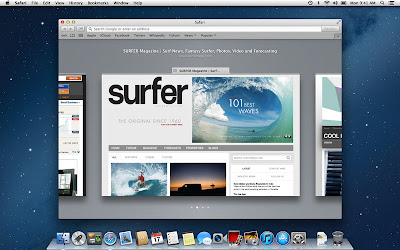


OS X 10.8 Mountain Lion
Images credits to Mac App Store

AMD Radeon HD 7990 Dual-GPU Delayed (Again)


AMD Radeon HD 7990 dual-GPU graphics card should have been out by now, but things keep happening and causing the release to be pushed back.

Most recently, it has been suggested that Advanced Micro Devices won't be able to start selling the item this July after all. This is reminiscent of how the dual-GPU adapter could not launch in June. Or April. Or even earlier in the first quarter of the year (2012).

There is a silver lining in all this though: we can breathe a sigh of relief knowing that the HD 7990 has not, in fact, been scrapped. The cause behind this latest delay is vague, but it could be related to price-performance-watt problems, or a shortage of PEX8747 PCIe bridge chips by PLX (also used in NVIDIA's GeForce GTX 690).

AMD Radeon HD 7970 X2 / 7990 PCB
Image credits to DonanimHaber

New Intel Pentium and Celeron Series CPUs Set for September Release


We've known for some time that Intel will launch a new bunch of central processing units in the relatively near future, but the full list continues to surprise us by growing, again and again.

Intel, of course, did not come out to say exactly which chips would appear, where and when, although it did touch upon several more noteworthy models. Most of the info made it to the web indirectly, through leaks, reports, product support listings by motherboard and laptop OEMs, etc. This instance is similar in that regard: a report has exposed the planned release of some Pentium and Celeron-series CPUs not known of previously.

Under the Pentium brand, the G645 and G645T will make their entrance, curious in that they are Sandy Bridge chips instead of Ivy Bridge ones. That said, the Celeron chips on the way are called G465, G550T and G555. All five CPUs will begin shipping in the week starting on September 2, but their specifications have not been found.

Intel logo
Image credits to Intel

Microsoft Surface Tablets Price over $1,000


When announcing its own devices powered by the Windows 8 platform, namely the Surface tablets, Microsoft announced that they would be priced in line with the currently available tablet PCs and ultrabooks.

At the time, many suggested that we might see the Windows RT Surface tablet going prices starting at $600, while the Windows 8 Pro-powered slate would cost over $800. However, it appears that these devices might actually land on shelves with much higher price tags than that, if the info listed on a Swedish retailer today is to be believed. Third-party retailer webhallen currently lists the Windows RT version of the Surface at 6,990 SEK ($1,000 / €830) for the 32GB model, and at 9,990SEK ($1,430 / €1,180) for the 64GB flavor. The Windows 8 Pro Surface slate, on the other hand, is listed at 12,990SEK ($1,860 / €1,540) for the 64GB version, and at 14,990SEK ($2.150 / €1,780) for the 128GB model.

The tablet PCs are up for pre-order at the moment, the retailer notes, adding that they are expected to arrive on shelves in the fourth quarter of 2012 and in the first quarter of the next year, respectively. While the release dates appear to be in line with what Microsoft has already unveiled for the new devices, it’s rather hard to believe that the prices are correct. Notebooknews notes that all prices for electronics are higher in Sweden, since they come with a 25 percent VAT, yet the difference between what was expected and what appears to have been set down is still high. 

Microsoft’s 10.6-inch Surface tablets will pack internal hardware similar with what one would expect in today’s highly-mobile devices, such as tablets and ultrabooks, hence the expected similarity in pricing. The Windows RT Surface is said to be powered by an Nvidia Tegra 3 ARM processor, while the Windows 8 Pro model should pack an Intel Core i5 x86 chip inside.

Microsoft Surface
Image credits to Microsoft

Microsoft Surface price tags
Image credits to Webhallen

Intel Works on Android 4.1 Jelly Bean Port to Intel Atom CPUs


Even though Windows 8 will offer a whole new marketing venue for tablet makers, Intel does not intend to slow down on the Android market, not after how firmly the OS has established itself on the mobile front.

In fact, Chipzilla has already begun porting the Android 4.1 Jelly Bean operating system to its Atom CPU line. Unfortunately, the reports on the matter do not give a time frame for when the software will be ready. Don't think Clover Trail will be part of this though. While Medfield will support Jelly Bean, Clover Trail is a Windows 8-only platform.

Apparently, Intel feels that 20 is a good number of design wins for the CPU line. We suppose there is always a chance that the Santa Clara, California-based company will change its mind, but we won't bank on that.

Android Jelly Bean logo
Image credits to Google

Apple Launch iPhone 5 on September 21st, 2012


The next iPhone model is expected to become official on September 21st, just in time for a commercial availability starting with the fourth quarter of the year.

Apple has already confirmed that the next iOS version would arrive this fall, but it did not offer specific info on new devices that would be launched running under it. Many of the rumors on the matter suggested that the company might be set to launch the new device in September, without a specific date set as of yet. However, it appears that Apple has actually got all things down on paper, and that the new iPhone will be unveiled to the world on September 21st. The info comes from App4phone.fr, which cites a large accessory maker from China, also said to be one of the third leading accessory makers in Hong Kong. The September 21st launch includes the unveiling of the iPhone 5 only for a handful of countries around the world, it seems. United States, France, UK and China will be among the markets to receive the device first.

On the other hand, if Apple gets this launch in line with the release of iPhone 4S, we should see the device available in a wide range of countries starting with mid-October, with even more of them set to receive it before the end of the year. What remains to be seen is whether September 21st is indeed the availability date of the device, which would suggest a September 11th announcement, or the unveiling date, which means that October 1st will see the new handset on shelves. iPhone 5 should hit the market with the new iOS 6 platform on board, a larger display, thinner body, and a variety of outer design modifications when compared to the currently available models. Thus, users might see it packing a smaller 19-pin dock connector, along with the headphone jack moved to the bottom end, a center front camera for video calls, thinner display, and support for nano-SIM cards. None of these has been confirmed for the time being, but only few changes are expected to emerge in the final product. Stay tuned for more on this.

iPhone 5 mockup
Image credits to CultofMac

VIA ARM-Based Pico-ITX Motherboard


VIA Technologies continues to move forward in its small niche, that of embedded and low-power processors and platforms, and the latest product is quite the interesting sight among pico-ITX motherboards.

ARM's deal with Taiwan Semiconductor Manufacturing Company has removed the final barrier between the architecture and the PC maker: 64-bit processing. It will take a while for the fruits of their labors to show though, but that doesn't mean the architecture is going to stagnate in the meantime. Indeed, there are other areas where ARM processors are sought after, and VIA is all too eager to extend their usefulness and get some sales in the process. The company has launched the VAB-800, a pico-ITX motherboard (10 cm x 7.2 cm, 3.9 x 2.83 inches, ATX/ITX compatible), with an ARM-based SoC (System-on-Chip) acting as its core. Said SoC can perform computing and video rendering tasks up to 1080p playback on just 5W of energy. Thus, VIA believes high-end industrial and in-vehicle fanless embedded systems will greatly benefit from making use of it.

“The VIA VAB-800 extends our industry leading range of Pico-ITX embedded platforms,” said Epan Wu, head of the VIA embedded platform division, VIA Technologies, Inc. “As a leader in hardware and software support, VIA can tailor our new ARM based offerings for customers to create systems through starter kits, customization support or offering complete systems for different applications.” Prospective buyers will have to select between VIA's own WonderMedia 800 MHz or Freescale 1 GHz ARM Cortex-A8 SoCs. Either way, the small mainboard gets 1 GB of DDR3 RAM, a SATA 3.0 Gbps port and a 64 GB eMMC memory card. There is no GPU because both aforementioned SoCs have an IGP (integrated graphics processor). 

As for connectivity, the list is quite extensive, especially for something this small: mini-HDMI, D-Sub (VGA), 10/100 Ethernet, two USB 2.0 ports, an RJ-45 jack, standard HD audio and SDIO and GPIO headers. Unfortunately, VIA did not give out pricing information but it did promise that board starter kit packages would be included with each shipment (for Ubuntu, Android and Windows Embedded Compact 7).


VIA VAB-800
Image credits to VIA

Twitter Delicious Facebook Digg Stumbleupon Favorites More

 
Design by Free WordPress Themes | Bloggerized by Lasantha - Premium Blogger Themes | coupon codes
`